
The Minister of Information and National Orientation, Mohammed Idris, has stated that the 2026 Federal Government budget is structured to consolidate the achievements of President Bola Tinubu’s reform agenda, which he said is already yielding tangible results.
Idris made the remarks in an op-ed titled “A Defining Moment for Nigeria: Why Staying the Course Matters”, published in national newspapers on Monday and highlighted in a statement by his media aide, Rabiu Ibrahim.
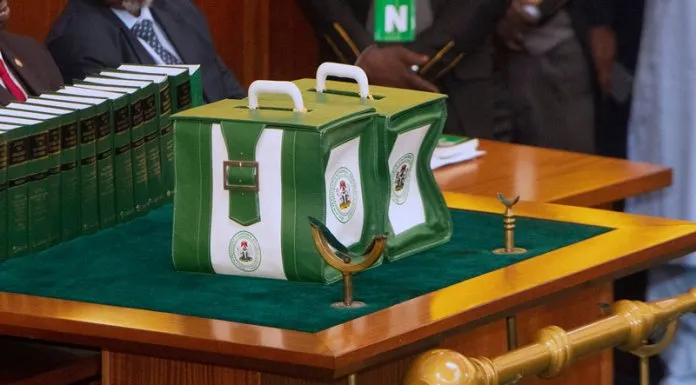
President Tinubu presented the N58.18 trillion budget on December 19, 2025, to a joint sitting of the National Assembly, under the theme “Budget of Consolidation, Renewed Resilience and Shared Prosperity.” Major allocations include N5.41 trillion for defence and security, N3.56 trillion for infrastructure, N3.52 trillion for education, and N2.48 trillion for health. The budget also earmarks N26.08 trillion for capital expenditure, N15.25 trillion for recurrent (non-debt) spending, and N15.52 trillion for debt servicing.
During the presentation, the President vowed to end the practice of overlapping budgets, abandoned projects, and inherited obligations, promising a more disciplined, results-focused approach to governance.
Describing the appropriation as strategic, Idris said:
“Our Budget of Consolidation, Renewed Resilience and Shared Prosperity is aimed at reinforcing what is working, solidifying gains, and ensuring that shared prosperity reaches more Nigerians faster.”
He highlighted that the past 31 months of the administration involved tough but necessary reforms to address long-standing economic stagnation and lay the foundation for sustainable growth. Early indicators of progress, he noted, include expanding business activity, stronger investor confidence, easing inflation, and improved external reserves.
Idris also emphasised transparent communication between the government and citizens, outlining initiatives to improve livelihoods. These include the Nigerian Education Loan Fund, the Presidential Compressed Natural Gas programme to lower transport costs, and youth-focused schemes such as the Labour Employment and Empowerment Programme, Jubilee Fellows, and the 3 Million Technical Talent initiative.
On food security, he cited the recapitalisation of the Bank of Agriculture and expanded mechanisation, while major infrastructure projects like the Coastal Highway, Sokoto–Badagry Expressway, Ajaokuta–Kaduna–Kano Gas Pipeline, and new rail developments aim to enhance connectivity and reduce costs.
Regarding security, Idris said the government is strengthening personnel, equipment, and international cooperation, pointing to the recent rescue of abducted students in Kebbi and Niger states. He urged citizens to stay engaged, protect public assets, and reject misinformation, acknowledging public fatigue amid ongoing reforms.