
Israel on Monday carried out a fresh round of airstrikes on Iran, intensifying a conflict that analysts say is fuelling one of the most severe global energy crises in decades.
Explosions were reported in Tehran, according to Iranian media, while Saudi Arabia and the United Arab Emirates confirmed intercepting incoming missiles and drones as tensions spread across the region.
The International Energy Agency revealed that at least 40 major energy facilities have been heavily damaged since the conflict began. Its Executive Director, Fatih Birol, warned that the scale of disruption could have far-reaching global economic consequences, stressing that no country would be spared if the crisis continues.
He noted that about 11 million barrels of oil per day have been lost—surpassing the supply shocks seen during the 1970s oil crises—pushing crude prices above $100 per barrel.
Iran Responds With Threats and Counterattacks
In retaliation, Iran has launched missiles and drones targeting Israeli positions and sites across the Gulf, including energy infrastructure and U.S. diplomatic facilities. Tehran has also restricted movement through the Strait of Hormuz, a key channel for nearly one-fifth of the world’s oil supply.
Iran’s Parliament Speaker, Mohammad Bagher Ghalibaf, warned that critical infrastructure across the region could become targets if hostilities persist. Lawmakers are also considering imposing tolls on vessels using the strait, a move that could further disrupt global trade.
U.S. Issues Warning as Conflict Deepens
Amid the rising tensions, U.S. President Donald Trump issued a 48-hour ultimatum to Iran, threatening to destroy its power facilities if it fails to reopen the Strait of Hormuz.
Meanwhile, Israeli Prime Minister Benjamin Netanyahu signalled that the military campaign could be prolonged. Military spokesman Brigadier General Effie Defrin also urged citizens to prepare for weeks of continued fighting involving Iran and Hezbollah.
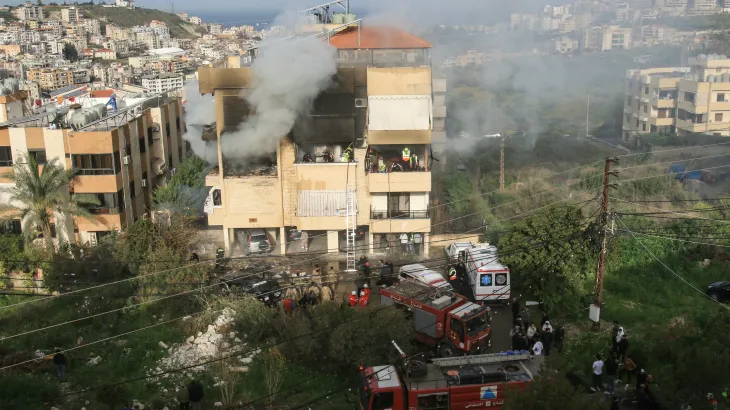
Israeli forces have expanded operations into Lebanon, targeting infrastructure allegedly used by the Iran-backed group. This has drawn criticism from Lebanese authorities, with President Joseph Aoun condemning the strikes as a violation of sovereignty, while Prime Minister Nawaf Salam blamed Hezbollah for triggering the crisis.
Rising Casualties and Humanitarian Concerns
The conflict has led to significant casualties and displacement. In Lebanon, over 1,000 people have reportedly been killed and more than one million displaced. In Iran, reported deaths have exceeded 3,200, including over 1,400 civilians, though these figures remain unverified.
Despite Israel’s advanced defence systems, some Iranian missiles have struck southern areas, including regions near sensitive facilities, leaving dozens injured.
The escalating violence continues to heighten fears of a broader regional war, with serious implications for global security and economic stability.