
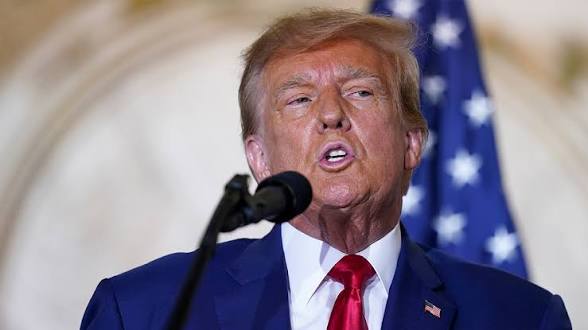
Donald Trump has stated that he would not consider deploying nuclear weapons against Iran, despite earlier rhetoric that hinted at the possibility of severe military action.
Speaking to journalists at the White House, Trump dismissed the need for nuclear force, emphasizing that conventional military operations were more than adequate. “No, I wouldn’t use it,” he said, adding that there was no justification for nuclear weapons when significant damage could already be achieved through standard military means. He also stressed that such weapons should never be used by any nation.
His comments mark a noticeable shift from his earlier warning on April 7, when he suggested that an entire civilisation could be wiped out—remarks that triggered widespread international concern. Shortly after that statement, however, Trump agreed to a ceasefire in the conflict involving the United States and Israel, which has since been extended.
During the tensions, Vice President JD Vance had indicated that Washington was prepared to escalate its offensive using weapons “not previously used,” prompting speculation about nuclear involvement. The White House later clarified that his statement did not refer to nuclear arms.
Vance was also engaged in diplomatic efforts with Iran, seeking tougher concessions over its disputed nuclear programme, though the negotiations did not produce a breakthrough.
Reaffirming his administration’s position, Trump said the priority remains preventing Iran from obtaining nuclear weapons, citing concerns about regional and global security.
Iran has consistently denied pursuing nuclear arms, while the International Atomic Energy Agency has indicated that there was no immediate threat of an atomic bomb before the conflict.
Historically, the United States remains the only country to have used nuclear weapons in war—during World War II—when atomic bombs were dropped on Hiroshima and Nagasaki, causing massive loss of life. Although Israel is widely believed to possess nuclear weapons, it has neither confirmed nor denied having them.
Trump’s firm rejection of nuclear use appears to contrast with longstanding U.S. defence policy, which keeps the option open under extreme circumstances. The U.S. has also declined to adopt a strict “no first use” nuclear policy.
In contrast, former president Barack Obama had previously advocated for a world without nuclear weapons, while still maintaining them as a deterrent as long as such arms exist.