
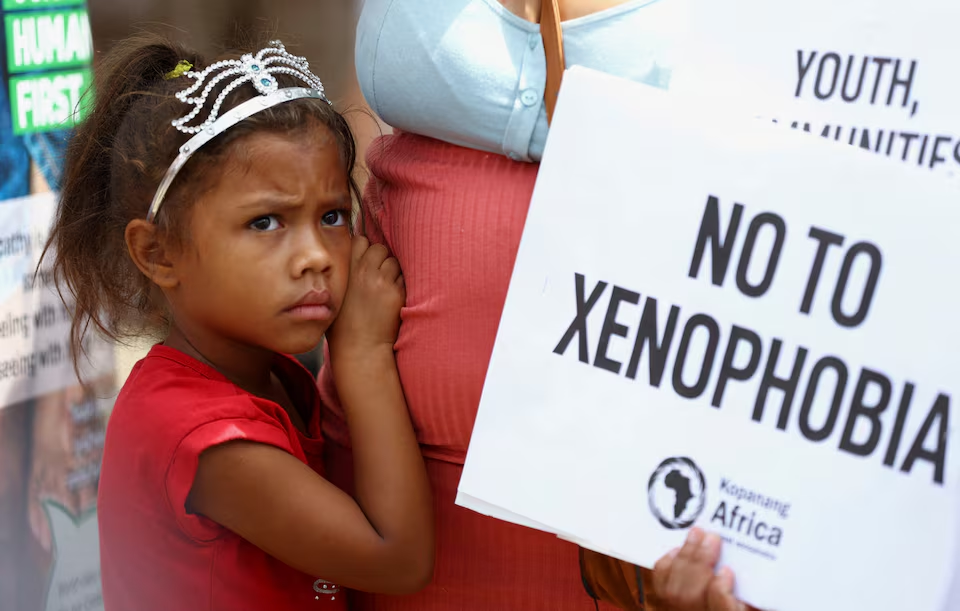
Tensions involving African migrants are once again drawing concern across the continent, with recent developments in South Africa and Ghana highlighting a mix of xenophobic incidents, protests, and growing anti-foreigner sentiment. While viral claims on social media suggest widespread expulsions of different nationalities, verified information indicates a more complex and evolving situation.
South Africa: Renewed Hostility Toward Foreign Nationals
Recent developments in South Africa point to a resurgence of hostility directed at foreign nationals, including citizens of Ghana and Nigeria.
Authorities have acknowledged several incidents—some captured in viral videos—that have triggered diplomatic concern across West Africa. In one widely shared case, a Ghanaian migrant was allegedly harassed and told to leave the country, prompting an official response from Ghanaian authorities.
In reaction, the South African government has pledged to crack down on those responsible. Officials stressed that xenophobic actions undermine national values and warned that individuals inciting violence or discrimination would face legal consequences.
Reports also indicate that anti-foreigner demonstrations in certain areas have turned violent, resulting in looting, injuries, and heightened fear among migrant communities, particularly Nigerians living in the country.
Additionally, a viral video showing a South African activist confronting a Ghanaian over immigration status has intensified online debates, underscoring tensions tied to migration, employment, and economic competition.
Ghana: Growing Concerns Over Anti-Nigerian Sentiment
In Ghana, there have been increasing reports of protests and resentment toward some Nigerian residents, especially those involved in business activities.
Demonstrations in the past featuring slogans like “Nigerians must go” have raised alarms about the safety and well-being of Nigerians residing in the country. While these protests have not escalated into widespread violence, they have created unease within the Nigerian community.
Some residents fear they may become targets of economic restrictions or social hostility, driven by perceptions that Nigerians dominate certain sectors of the local economy.
However, Ghanaian authorities have sought to calm tensions by reiterating that there is no official policy endorsing xenophobia. Government representatives have emphasized their commitment to maintaining peace, protecting foreign nationals, and promoting dialogue.
Social Media vs Reality
A significant factor fueling the narrative of mass expulsions is the role of social media. Many of the most alarming claims appear to stem from unverified videos and posts rather than confirmed large-scale actions by governments.
Analysts warn that isolated incidents and localized protests can quickly be amplified online, creating the impression of a broader continental crisis. This digital amplification often intensifies fear, misinformation, and diplomatic strain.
Historical Context
The current tensions echo past events in West Africa involving migration and economic rivalry:
In 1969, Ghana expelled a large number of foreign nationals, including Nigerians.
In 1983, Nigeria deported over a million Ghanaians during a period of economic hardship.
These historical episodes continue to shape public perception and political responses, particularly during times of economic difficulty.
Diplomatic Reactions
Recent incidents have prompted diplomatic engagement across the affected nations:
Ghana has summoned South Africa’s envoy, demanding stronger measures to protect its citizens.
Nigeria has advised its nationals in South Africa to remain cautious amid potential unrest.
Observers note that the varying responses from governments have sparked broader discussions about regional cooperation and the protection of citizens abroad.
Conclusion
While there are genuine and concerning xenophobic incidents in South Africa and rising tensions in Ghana, the situation does not amount to a coordinated or continent-wide expulsion of nationalities.
Instead, current developments reflect:
Localized xenophobic attacks in South Africa
Protest-driven resentment in Ghana
Amplification of events through social media
Ultimately, these issues highlight deeper challenges—including economic pressure, migration dynamics, and regional competition—that continue to test unity and cooperation across Africa.

About the Publisher
Sir Bartholomew White Ebe is a Media personality, Actor, music artist, producer, blogger, Brand Influencer and relationship coach. He is the publisher of Snow Multimedia Connect (SNOW TV}, a Television channel and digital media platform that focuses on news, entertainment, lifestyle, interviews, event coverage and multimedia production.
Email: snowbwhyte@gmail.com