
Data released by the Nigeria Inter-Bank Settlement System (NIBSS) shows that Bank Verification Number (BVN) enrolments in Nigeria rose to 67.8 million as of December 2025.
The figure represents an increase of 4.3 million from the 63.5 million recorded in 2024, highlighting steady growth in the adoption of biometric identification across the financial sector.
A breakdown of NIBSS data over the past five years shows consistent expansion: 51.9 million in 2021, 56 million in 2022, 60.1 million in 2023, 63.5 million in 2024, and 67.8 million in 2025. This reflects a 6.8 per cent year-on-year growth between 2024 and 2025, maintaining the upward trend amid ongoing financial inclusion initiatives.
The continued rise in BVN enrolments has been largely attributed to policy measures and enforcement directives introduced by the Central Bank of Nigeria (CBN).
Meanwhile, NIBSS data indicates that Nigeria had about 325.6 million active bank accounts as of August 2025. The figure is high because it captures all categories of accounts—savings, current, and corporate—held by customers across the banking system, with many individuals operating multiple accounts.
The BVN project remains one of Nigeria’s most significant digital transformation initiatives, spearheaded by the CBN in collaboration with the Bankers’ Committee. Launched on February 14, 2014, the scheme was designed to tackle identity fraud and create a unified identification system within the banking sector.
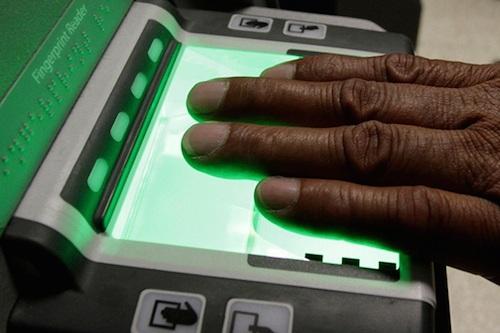
According to the CBN, the objective was to assign every bank customer a unique 11-digit number linked to their biometric data, including fingerprints and facial images. Analysts regard this biometric framework as a stronger safeguard against identity theft than traditional password or PIN-based systems.
Under the enrolment process, customers visit any bank branch to complete a form and undergo biometric capture. Following verification—typically within 24 to 48 hours—the BVN is generated and sent via SMS. This single BVN is then linked to all of the customer’s accounts across Nigerian banks, providing a unified financial identity.