
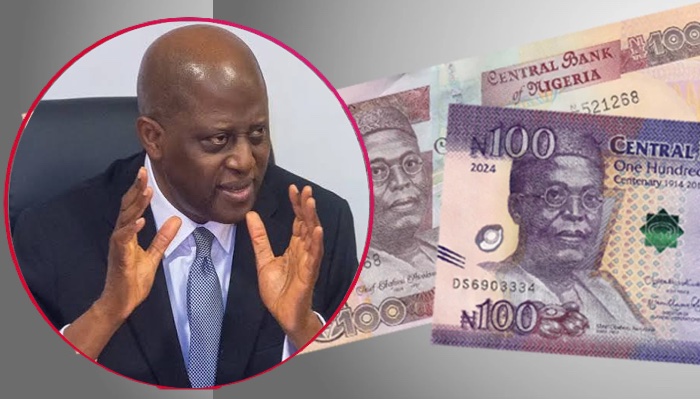
The Governor of the Central Bank of Nigeria (CBN), Olayemi Cardoso, has assured Nigerians that the ₦100 and ₦200 notes remain valid legal tender despite their apparent scarcity across the country.
Speaking after the Monetary Policy Committee (MPC) meeting in Abuja on Tuesday, Cardoso attributed the reduced circulation of the lower-denomination notes to the increasing adoption of digital payment systems and changing demand for physical cash.
He emphasized that the apex bank has not withdrawn any currency denomination from circulation and urged Nigerians to continue accepting the ₦100 and ₦200 notes for transactions.
According to him, all existing naira denominations remain legal tender unless the CBN officially announces otherwise.
Cardoso explained that the decline in the availability of the notes is largely driven by market demand and the country’s ongoing transition toward a more digitally driven financial system.
He noted that as more Nigerians embrace electronic payment channels, the need for lower-value notes naturally declines, reducing the volume required for printing and circulation.
The CBN governor also pointed out that inflation and the declining purchasing power of the naira have contributed to the reduced use of smaller denominations in everyday transactions.
He added that expanding financial inclusion and the growing popularity of digital payments are expected to further reduce reliance on low-value notes over time.
CBN Reaffirms Commitment to Single-Digit Inflation
Cardoso also reiterated the Central Bank’s commitment to bringing inflation down to a single-digit rate.
He recalled that Nigeria had recorded 11 consecutive months of disinflation, with the CBN initially projecting that inflation would move toward single digits by early 2027.
However, he acknowledged that prolonged external economic shocks have slowed the pace of progress.
Despite these challenges, Cardoso maintained that the apex bank remains focused on achieving its inflation target and will continue implementing policies aimed at restoring price stability and strengthening the Nigerian economy.