
Tensions between Iran and the European Union have intensified after Tehran declared the armed forces of European countries “terrorist organisations,” in retaliation for the EU’s decision to label Iran’s Islamic Revolutionary Guard Corps (IRGC) a terrorist group.
The announcement was made on Sunday by the Speaker of Iran’s Parliament, Mohammad Bagher Ghalibaf, against the backdrop of growing friction between Iran and Western nations.
During the parliamentary session, Iranian lawmakers donned green uniforms linked to the IRGC as a symbolic show of support. Footage aired on state television showed legislators chanting anti-Western and anti-Israeli slogans.
Condemning what he described as Europe’s “irresponsible move,” Ghalibaf said Iran’s response was grounded in existing law.
“Based on Article 7 of the Law on Countermeasures Against the Designation of the IRGC as a Terrorist Organisation, the armed forces of European countries are hereby considered terrorist groups,” he stated.
It remains unclear what immediate actions or consequences will follow the declaration.
The law referenced by Ghalibaf was enacted in 2019 after the United States first designated the IRGC as a terrorist organisation.
Sunday’s session also coincided with the 47th anniversary of the return from exile of Ayatollah Ruhollah Khomeini, the founder of the Islamic Republic and leader of Iran’s 1979 revolution.
The IRGC functions as the ideological backbone of Iran’s military, tasked with defending the Islamic system against both internal and external threats.
Western governments have accused the Guards of directing a violent crackdown on recent protests in Iran, which allegedly resulted in thousands of deaths. Iranian authorities, however, have blamed the unrest on what they describe as “terrorist activities” instigated by the United States and Israel.
Last Thursday, the European Union agreed to designate the IRGC as a terrorist organisation over its handling of the protests, aligning with similar decisions by the United States, Canada and Australia.
Ghalibaf accused European leaders of acting under pressure from Washington and Israel.
“This decision, carried out in line with the directives of the American president and the leaders of the Zionist regime, has hastened Europe’s slide into irrelevance in the emerging global order,” he said, adding that the move had only bolstered domestic backing for the IRGC.
The parliamentary session took place amid renewed warnings exchanged between Iran and the United States over the possibility of military confrontation.
Following Iran’s response to the protests, US President Donald Trump threatened intervention and ordered the deployment of an aircraft carrier strike group to the region.
In recent days, however, both sides have indicated a readiness to pursue dialogue.
Ali Larijani, head of Iran’s Supreme National Security Council, said on Saturday that talks were quietly progressing.
“Despite the noise created by a manufactured media war, the framework for negotiations is moving forward,” Larijani said.
Trump later confirmed that discussions were ongoing but reiterated his warning.
“Iran is talking to us, and we’ll see if something can be worked out. Otherwise, we’ll see what happens. We have a major fleet heading there,” he told Fox News.
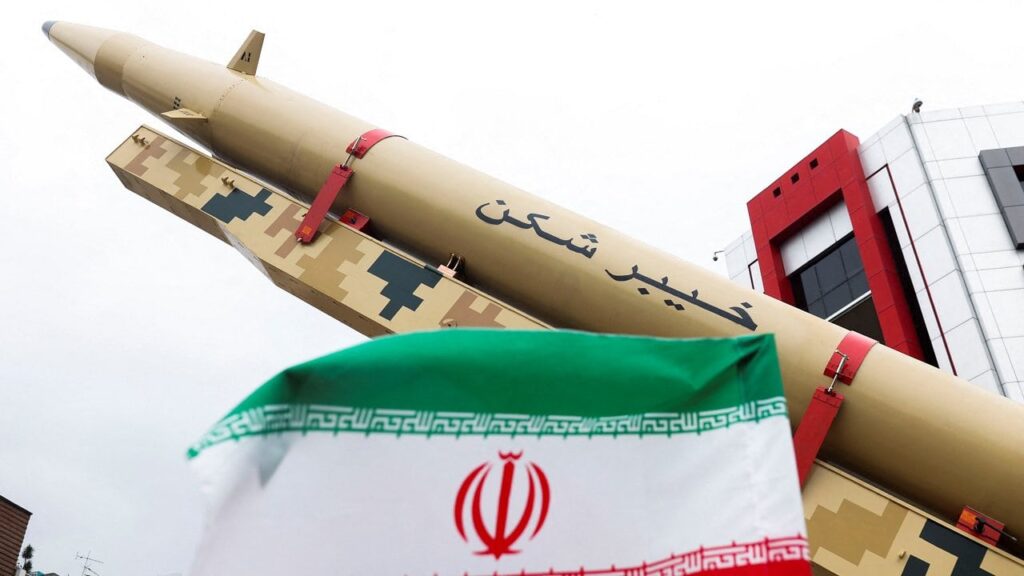
Trump has previously suggested that Iran would rather negotiate over its nuclear and missile programmes than face potential US military action.
Iran Sets Terms for Nuclear Negotiations
Iran has said it remains open to nuclear talks, provided its missile and defence capabilities are excluded from the discussions.
Iranian President Masoud Pezeshkian said on Saturday that conflict would serve no one’s interests.
“A war would not benefit Iran, the United States, or the region,” Pezeshkian said during a phone call with Egyptian President Abdel Fattah al-Sisi, according to his office.
Qatar’s Prime Minister and Foreign Minister, Sheikh Mohammed bin Abdulrahman Al Thani, also visited Iran on Saturday as part of diplomatic efforts to ease tensions, Qatar’s foreign ministry confirmed.
As rhetoric escalates, many ordinary Iranians have voiced concern about the possibility of conflict.
Firouzeh, a 43-year-old homemaker who asked not to be fully identified, said the situation has left her anxious.
“These days, I keep watching the news until I fall asleep. Sometimes I even wake up at night just to check the latest updates,” she said.