
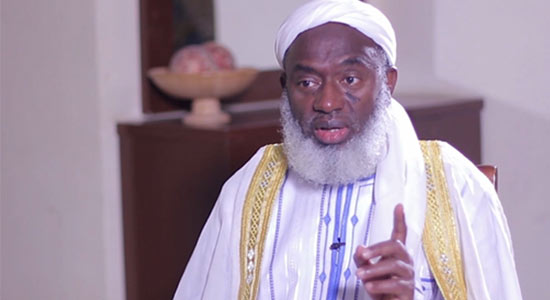
Islamic cleric, Ahmad Gumi, has alleged that the Federal Government is aware of the identities and locations of all terrorists operating in the country.
Speaking during an interview on DRTV, Gumi responded to allegations that he maintains personal contact with terrorists and bandits or advocates on their behalf.
According to him, his engagements with such groups are not done privately but with the knowledge and involvement of security agencies.
“The government knows every terrorist by name and where they are located. I don’t go alone to negotiate; I go with the police, the military, and other security agencies,” he said.
Gumi explained that in some instances he also works with traditional leaders when attempting to reach armed groups. He added that he had previously travelled deep into forest areas during such engagements, sometimes accompanied by women.
In a related remark, the cleric stated that he would be willing to support armed groups such as the Indigenous People of Biafra (IPOB), Boko Haram, and bandit factions if they agree to abandon violence and embrace dialogue.
He stressed that his support would depend on their readiness to lay down their arms and participate in peaceful discussions with the Nigerian government.
“Dialogue can bring peace and we are men of peace. Even IPOB, which once pushed for secession, if they are ready to drop their arms and come to the table for discussion, I am ready to support them. What we do not want is violence,” he said.
Gumi maintained that negotiation remains one of the most effective approaches to resolving conflicts and restoring stability in the country.
He also called for a balanced strategy in tackling insecurity, combining military action with non-violent approaches such as dialogue and intellectual engagement.
According to the cleric, experts and stakeholders should be involved in conversations aimed at finding lasting solutions to Nigeria’s security challenges.
Gumi further linked the country’s worsening insecurity to persistent socio-economic problems. He pointed to poor road infrastructure, unreliable and costly electricity, weak healthcare services and challenges in the education sector as major issues that must be addressed to achieve lasting peace.
“Look at the road network; it is in terrible condition. Electricity is erratic and very expensive. Healthcare is also a problem. Even wealthy Nigerians travel abroad for treatment. When it comes to education, the situation is not encouraging either,” he added.