
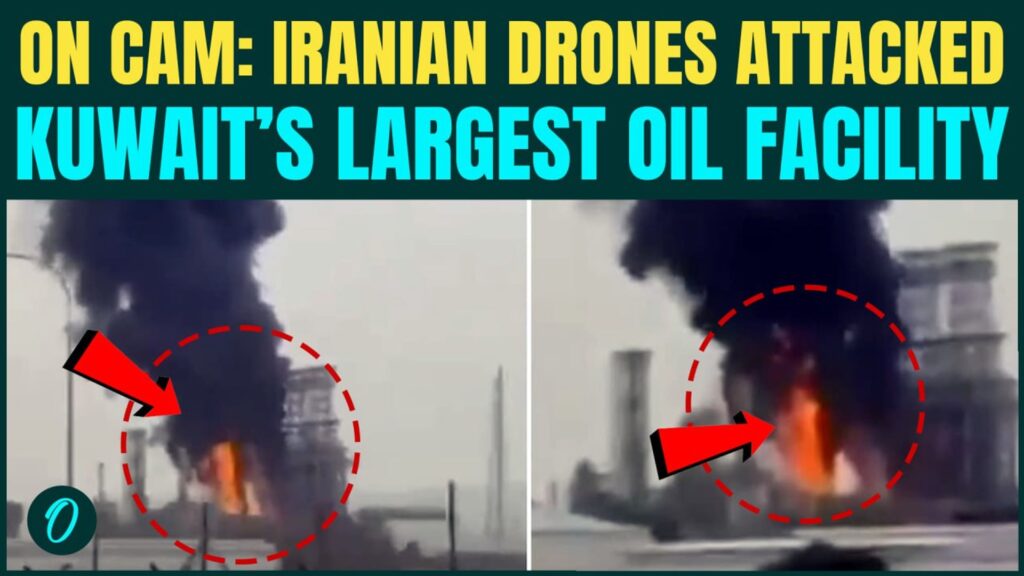
Tensions have escalated in the Gulf region after a suspected Iranian drone strike ignited a major fire at a key oil facility in Kuwait on Friday, raising fresh concerns over global energy stability.
Firefighters battled the blaze at the Mina Al-Ahmadi refinery, one of Kuwait’s largest oil processing sites, in what marks the latest escalation in a widening regional conflict increasingly targeting critical energy infrastructure.
The attack followed closely behind a strike on Qatar’s Ras Laffan gas facility—one of the world’s most important liquefied natural gas hubs—highlighting the growing vulnerability of global energy supply chains.
Iran had earlier vowed retaliation after an اسرائیלי strike damaged its South Pars gas field, part of the world’s largest known gas reserve and a cornerstone of its domestic energy system.
Despite repeated calls from European leaders for restraint and protection of energy infrastructure, hostilities across the region have continued to intensify.
Iran’s Revolutionary Guards struck a defiant tone, insisting their military production capabilities remain intact despite sustained attacks. However, shortly after making those claims, a spokesperson, Ali Mohammad Naini, was confirmed killed in joint U.S.-Israeli strikes.
Meanwhile, Israeli Prime Minister Benjamin Netanyahu заявил that Israel and its allies are gaining the upper hand in the conflict, expressing confidence that the war could conclude sooner than expected.
“We are winning and Iran is being decimated,” Netanyahu said, while also hinting at the possibility of further escalation, including potential ground operations.
The ongoing conflict has rattled global oil markets, with analysts warning of prolonged disruptions. Damage to the Ras Laffan facility alone could lead to losses estimated at $20 billion annually, with repairs potentially taking years.
Energy expert Robert Pape cautioned that sustained damage to energy infrastructure could trigger a broader economic crisis.
“This is how a regional war becomes a historic global economic crisis,” he warned.
Oil prices initially dipped following Netanyahu’s remarks suggesting a quicker resolution, but rebounded after news of the Kuwait refinery fire. Brent crude hovered around $108 per barrel, while West Texas Intermediate traded near $94.
At the heart of global concern is Iran’s control of the Strait of Hormuz, through which roughly one-fifth of the world’s oil and liquefied natural gas supplies pass, heightening fears of major supply disruptions.
French President Emmanuel Macron said France would consult with permanent members of the United Nations Security Council on ensuring safe navigation through the strait, once hostilities ease.
Overnight, Iranian state media reported multiple missile launches targeting Israel, with explosions heard over Jerusalem, though no casualties were immediately confirmed.
Elsewhere, the United Arab Emirates reported missile activity, while Saudi Arabia said it intercepted more than a dozen drones early Friday.
The violence comes as Muslim-majority nations in the region mark Eid al-Fitr, casting a shadow over celebrations.
The conflict has also spread into Lebanon, where Israeli airstrikes have intensified following rocket fire from Hezbollah. Authorities say over 1,000 people have been killed in strikes affecting southern and eastern regions, as well as the capital, Beirut.
Lebanese President Joseph Aoun renewed calls for a ceasefire during talks with French Foreign Minister Jean-Noël Barrot, urging diplomatic efforts to end the violence.
Across the region, traditional celebrations have been overshadowed by fear and economic hardship. In Beirut, residents described a subdued atmosphere, with many cancelling festivities amid displacement and financial strain.
In Iran, citizens are marking Nowruz alongside the end of Ramadan, holding onto cautious hope for calm despite ongoing hostilities.