
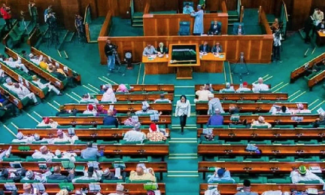
The House of Representatives Ad-hoc Committee investigating agricultural subsidies, intervention funds, grants and aids has summoned the Auditor-General of the Federation, alongside the Ministers of Finance and Agriculture, over what lawmakers described as serious lapses in accountability for funds released to the sector between 2015 and 2025.
The decision followed a resumed hearing at the National Assembly, where the committee said documents submitted were inadequate and key audit records were missing.
Chairman of the committee, Jamo Aminu, expressed dissatisfaction with the Office of the Auditor-General for failing to present comprehensive audit reports on several agricultural subsidy and intervention programmes spanning a decade. He said the probe was part of the House’s broader effort to scrutinise public expenditure in the agricultural sector amid rising food prices, deepening food insecurity and concerns about the effectiveness of repeated government interventions.
Aminu noted that lawmakers expected detailed audit reports that would clearly show how funds were disbursed, utilised and what impact the programmes had on food production, farmer support and national food security.
“We cannot properly conduct this investigation without complete audit records. These funds cover a ten-year period and involve programmes of national importance,” he said, stressing that transparency and accountability must be upheld.
In response, Mohammed Adamu, a Deputy Director at the Office of the Auditor-General of the Federation, told the committee that delays in completing the audits were largely due to the Federal Ministry of Agriculture’s failure to provide essential documents. He said repeated requests for records relating to agricultural subsidies, grants and intervention programmes had gone unanswered.
“The Ministry of Agriculture is the primary source of these documents. Without their cooperation, finalising the audit has been challenging,” Adamu explained.
He also urged the committee to broaden its investigation to include both the Ministries of Agriculture and Finance, noting that they play key roles in the release, management and oversight of the funds.
After deliberations, the committee summoned the Auditor-General of the Federation, as well as the Ministers of Agriculture and Finance—or their representatives—to appear before it on February 3. Lawmakers warned that failure to comply would attract legislative sanctions in line with the powers of the National Assembly.
Meanwhile, as the House resumed plenary following the Christmas and New Year recess, lawmakers reaffirmed their commitment to amending the Electoral Act, reviewing key constitutional provisions and subjecting the 2026 budget to thorough scrutiny.
Deputy Speaker Benjamin Kalu made this known during Tuesday’s plenary, which opened with a valedictory session in honour of three late lawmakers—Godiya Akwashiki, Okechukwu Ezea and John Kojo-Brambaifa.
Kalu said the amendment of the Electoral Act would be a major legislative focus in 2026, assuring that outstanding issues would be addressed to ensure a smoother electoral process. He added that the House would also pursue constitutional reviews and maintain strong oversight of the 2026 budget to ensure it supports effective governance and national development under the Renewed Hope Agenda.