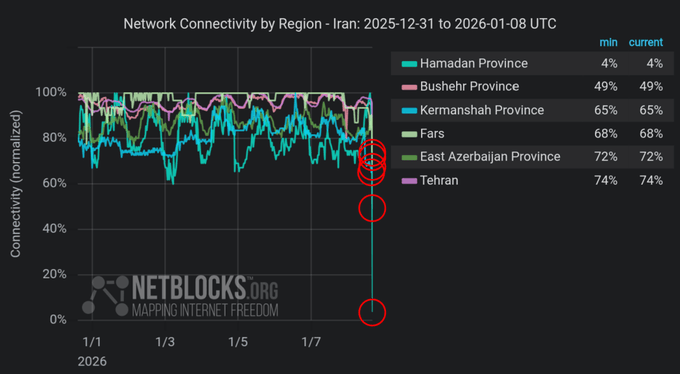
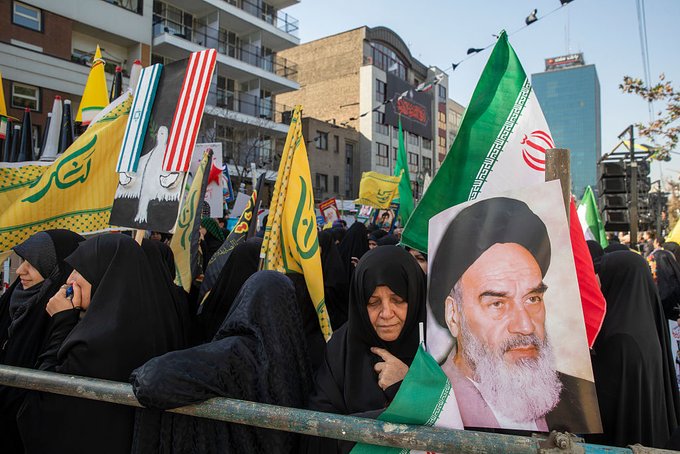
Iran was thrown into a nationwide internet shutdown on Thursday night, January 8, as widespread anti-government protests swept across the country. Demonstrators took to the streets chanting slogans against the ruling theocratic system, fueled by mounting frustration over economic hardship and intensified security crackdowns.
Authorities severed internet access and telephone services shortly after protests broke out in Tehran and other major cities. Despite the blackout, videos of the demonstrations continued to surface online as the unrest entered its second week.
Cybersecurity analysts say such nationwide shutdowns are often imposed when authorities anticipate the use of lethal force, with the aim of curbing information flow and reducing international scrutiny.
Protests have erupted in more than 100 cities, stretching from Ilam province near the Iraqi border to Tehran and the northeastern city of Mashhad. Security forces have responded forcefully, following a familiar pattern of suppression without addressing the underlying causes of public anger.
Human rights organizations report that at least 45 protesters, including eight children, have been killed since the demonstrations began. Hundreds have been injured, and more than 2,000 people have been arrested, according to monitoring groups.
Some demonstrators appeared to be answering calls from exiled Crown Prince Reza Pahlavi, who urged Iranians to unite and continue protesting. Chants such as “This is the final battle, Pahlavi will return” were heard during marches, according to verified footage reviewed by international media.
Videos confirmed by independent sources showed large crowds blocking roads, setting fires, and clashing with security forces in several cities. State media acknowledged what it described as “scattered” protests and reported damage to public and private property, along with unspecified casualties.
The unrest has attracted international attention. US President Donald Trump warned that Washington would respond decisively if Iranian security forces continue killing protesters, reiterating earlier threats during a radio interview.
What began as coordinated protests by shopkeepers and students in Tehran’s bazaars and universities has since escalated into nationwide street demonstrations. Violence intensified after security forces were deployed to disperse crowds.
Millions of Iranians are grappling with soaring inflation, a rapidly weakening currency, and shortages of essential goods and medicines. Many say prices are rising so fast that households can no longer keep up.
Journalists and activists note that the protests have moved beyond economic complaints. Increasingly, demonstrators are openly demanding an end to the Islamic Republic, arguing that the system is beyond reform.
The unrest was initially triggered by protests from shopkeepers at Tehran’s Grand Bazaar over worsening economic policies. Tensions escalated after the central bank scrapped a program granting some importers access to subsidized foreign currency, leading to sharp overnight price hikes and forcing many businesses to shut down.
Authorities attempted to calm the situation by announcing modest monthly cash payments, but officials admitted the move would not resolve the broader crisis.
Major protest flashpoints have emerged in provinces such as Ilam and Lorestan, where crowds have openly challenged Supreme Leader Ayatollah Ali Khamenei. In several cities, protesters were seen setting fire to government buildings, tearing down national flags, and engaging in clashes with security forces.
Human rights groups say security forces have used live ammunition in some areas and carried out mass arrests. Iranian officials claim hundreds of police and paramilitary personnel have been injured, while state media reports that some security personnel have been killed.
Analysts describe the unrest as the largest since the protests sparked by the death of Mahsa Amini in police custody in 2022. They say the participation of bazaar traders—traditionally a core support base of the regime—signals a deeper and more dangerous level of discontent.
The protests are unfolding against a backdrop of heightened regional tensions and renewed threats of foreign military action, adding further pressure on Iran’s leadership.