
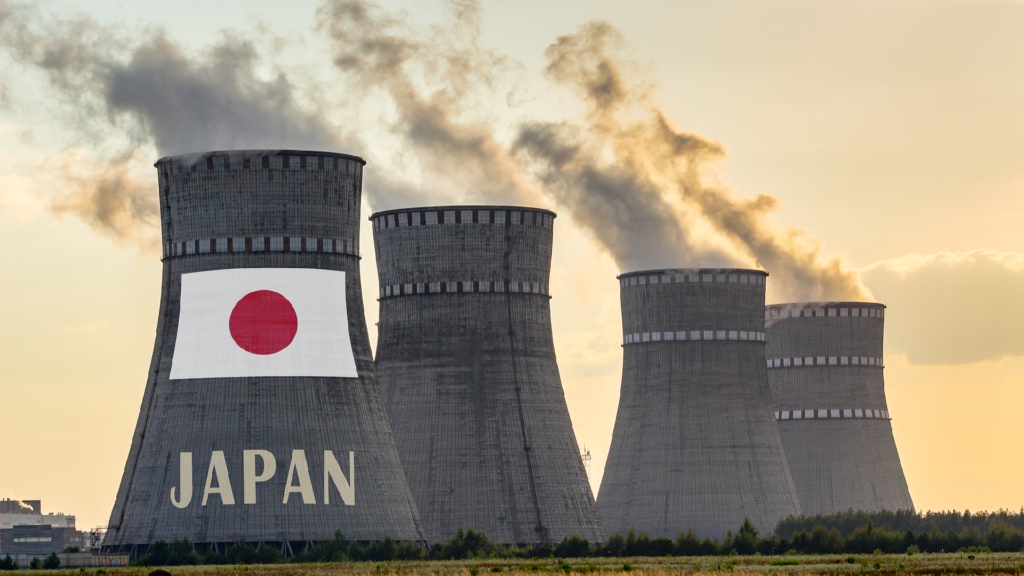
Japan is preparing to restart the world’s largest nuclear power station on Wednesday, marking its first operation since the 2011 Fukushima disaster, despite lingering safety concerns among local residents, according to the plant’s operator.
The Kashiwazaki-Kariwa nuclear facility, located in Niigata prefecture, received final approval last month from the provincial governor, even as public opinion remains deeply divided over the move.
Tokyo Electric Power Company (TEPCO) confirmed that following the final authorization on Wednesday, it would proceed with start-up procedures, including removing control rods after 7:00 p.m. to bring one reactor online.
On Tuesday, several dozen protesters—mostly elderly residents—gathered near the plant in freezing conditions to oppose the restart. Many argued that Niigata residents bear the risks while electricity generated at the plant primarily serves Tokyo.
Survey data from September showed that about 60 percent of residents oppose resuming operations at the plant, while 37 percent are in favor.
Although Kashiwazaki-Kariwa has seven reactors and is the largest nuclear power station globally by capacity, only one unit is scheduled to resume operations for now. The entire facility was shut down after the massive earthquake and tsunami in 2011 triggered meltdowns at the Fukushima Daiichi nuclear plant.
Japan, which lacks natural resources, is now reviving nuclear energy as part of efforts to reduce fossil fuel dependence, achieve carbon neutrality by 2050, and meet rising power demand driven in part by artificial intelligence. Prime Minister Sanae Takaichi has publicly supported the renewed use of nuclear power.
Since the Fukushima shutdown, 14 reactors—mainly in western and southern Japan—have been restarted under stricter safety regulations, with 13 currently in operation. The Kashiwazaki-Kariwa restart will be the first for a TEPCO-operated reactor since 2011.
However, opposition remains strong. Protesters cite unresolved issues at Fukushima, past safety lapses, concerns over evacuation plans, and the plant’s location near active seismic faults. In early January, seven anti-nuclear groups submitted a petition with nearly 40,000 signatures to TEPCO and Japan’s Nuclear Regulation Authority, warning of earthquake risks and public anxiety.
TEPCO says the facility has undergone extensive safety upgrades, including the construction of a 15-metre tsunami wall and improvements to emergency power systems. Still, critics point to a history of scandals in Japan’s nuclear sector, including recent reports of data falsification and equipment failures.
Before the 2011 disaster—which claimed about 18,000 lives—nuclear energy accounted for roughly one-third of Japan’s electricity supply. In 2023, nearly 70 percent of the country’s power came from fossil fuels, a figure the government aims to reduce to 30–40 percent over the next 15 years through expanded use of renewables and nuclear energy.
Under a government-approved plan, nuclear power is expected to provide about 20 percent of Japan’s electricity by 2040, up from around 8.5 percent in the 2023–24 fiscal year. Meanwhile, the decommissioning of the Fukushima plant continues, a complex process expected to take decades.