
Football activities across parts of the Middle East have been thrown into disarray following escalating hostilities involving the United States, Israel and Iran, leaving several Nigerian players uncertain about their immediate future.
The Qatar Football Association confirmed the suspension of all domestic fixtures from Sunday, while Iran’s Persian Gulf Pro League and the Israeli Premier League have also paused matches amid growing regional tensions. The Asian Football Confederation has equally postponed club championship play-offs scheduled in affected zones.
Elite Round of 16 fixtures in the continental Champions League have been rescheduled, and the Finalissima — billed for March 27 in Doha between European champions Spain and Copa America winners Argentina — now hangs in the balance.
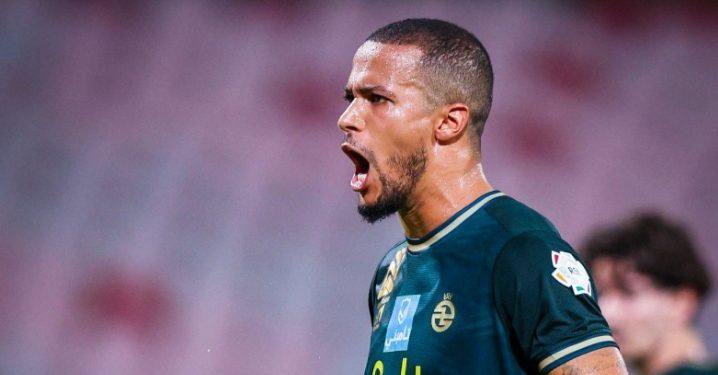
In Qatar, Super Eagles captain William Troost-Ekong of Al-Ahli and Edidiong Udosen of Umm Salal are among those impacted by the suspension. The halt has disrupted training routines and performance-based earnings linked to match appearances.
Several Nigerians in Qatar’s second tier — Abdulah Oyekanmi, Ambrose Ochigbo, Christopher Boniface and Peter Olawale — are also dealing with interrupted campaigns.
Saudi Arabia has raised its security alert after condemning Iranian strikes targeting neighbouring states, though it stopped short of confirming any direct hit on the kingdom. Young forward George Ilenikhena, who recently joined Al-Ittihad in a high-profile move, could see his integration affected if competitive matches remain on hold.
Other Nigerian players in Saudi Arabia’s lower division, including Simy, Anthony Okpotu, Aremu Owolabi and Suleiman Bello, are similarly facing uncertainty as league activities slow down.
The disruption extends to women’s football, with stars such as Asisat Oshoala, Francisca Ordega, Ashleigh Plumptre and goalkeeper Tochukwu Oluehi adjusting to tighter security measures and unclear fixture schedules.
In Iraq — home to the largest group of Nigerian footballers in the region — concerns have intensified following reports of airstrikes on pro-Iran military positions. Seventeen Nigerians, including Kingsley Kuku, Ibrahim Tomiwa, Iyayi Atiemwen, Samson Dare Gbadebo and Joshua Akpudje, are contending with disrupted training sessions and doubts over match continuity.
The United Arab Emirates has also heightened security after at least one reported fatality, affecting Nigerian professionals such as Saviour Godwin, Favour Ogbu, Elijah Benedict and Rilwanu Sarki.
Meanwhile, in Jordan, missile interceptions and elevated alert levels have complicated travel plans and preparations for players like Abdul Ajagun, Benjamin Okoronkwo, Kalu Onyemaechi and Azeez Oseni, further underscoring the far-reaching impact of the regional crisis on Nigerian footballers abroad.