
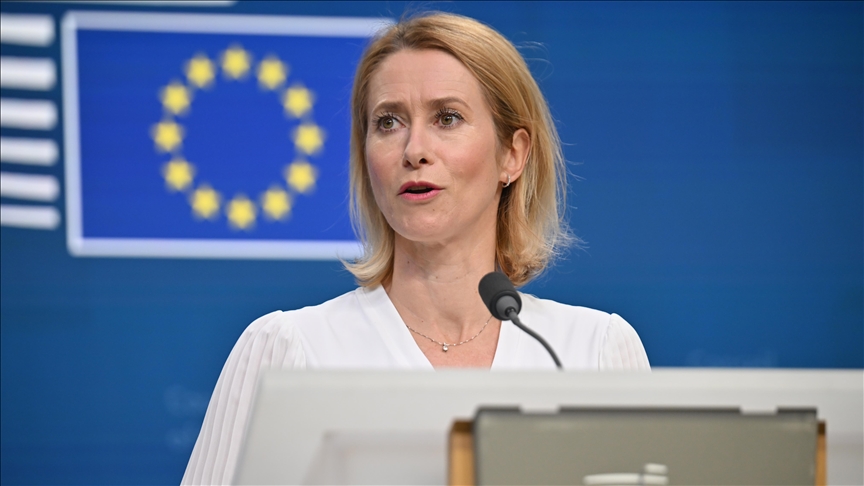
Countries in the Middle East have expressed concern to European officials that the escalating conflict involving Iran, the United States and Israel could trigger a civil war within Iran, according to the European Union’s foreign policy chief, Kaja Kallas.
Speaking on Thursday ahead of a virtual meeting with EU foreign ministers and representatives of the Gulf Cooperation Council, Kallas said several countries in the region are worried about internal instability in Iran amid the ongoing tensions.
“When we talk to countries in the region, they are worried about the possibility of civil war inside Iran due to the leadership situation and the developments taking place there,” she said.
Kallas noted that the European Union is pushing for a diplomatic solution to the crisis, stressing that negotiations remain the best path to ending the growing conflict.
“Wars ultimately end through diplomacy, and there must be room for diplomatic engagement to break this cycle of escalation,” she told reporters.
She added that the EU remains deeply concerned about maritime security in the region and is working to ensure that key shipping routes, including the Strait of Hormuz, remain open and secure.
However, Kallas explained that the recent attacks in the Gulf region have had limited short-term impact on the EU’s oil supply because the bloc does not heavily depend on energy imports from Gulf states.
US–Spain Dispute Deepens
Meanwhile, the conflict has also intensified tensions between the United States and Spain.
Washington has reportedly threatened to reduce trade ties with Madrid after Spain refused to allow American aircraft to use jointly operated naval and air bases in southern Spain for military operations targeting Iran.
Spain has criticised the air strikes carried out by the United States and Israel against Iran, describing them as reckless and unlawful.
Although the White House claimed on Wednesday that Spain had agreed to cooperate, officials in Madrid quickly denied the assertion.
Responding to questions about the dispute and its possible implications for EU member states, Kallas said she hopes Washington will honour the trade agreement reached with the European Union last year.
The EU foreign policy chief’s remarks highlight growing global concern that the conflict could have wider regional consequences, particularly if instability within Iran worsens.
Countries in the Gulf region are especially worried about the potential fallout, including refugee movements, economic disruption and the spread of violence across neighbouring states.