
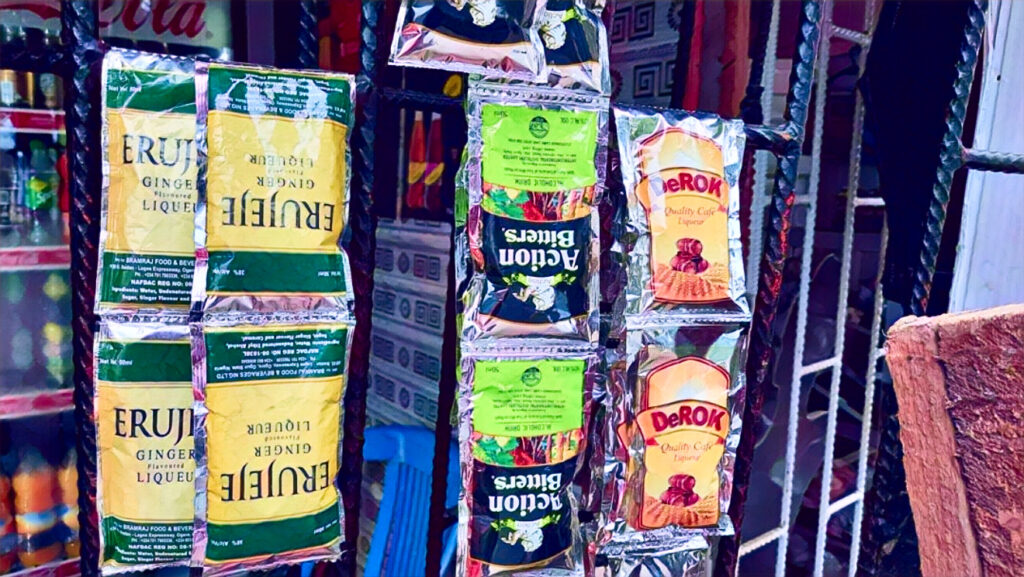
The National Agency for Food and Drug Administration and Control (NAFDAC) has explained that its enforcement of the ban on alcoholic drinks sold in sachets and small plastic or glass bottles is designed to protect children and young people, not to penalise manufacturers.
In a statement issued on Thursday, January 29, NAFDAC Director-General, Prof. Mojisola Adeyeye, said the policy was motivated by public health concerns and mounting evidence that alcohol packaged in sachets and containers below 200 millilitres has contributed to rising cases of underage drinking nationwide.
The agency recently commenced enforcement of the ban following a directive from the Senate, with the support of the Ministry of Health and Social Welfare.
According to Adeyeye, the small, inexpensive packaging of high-alcohol-content beverages makes them “easily accessible, affordable and easy to conceal,” encouraging widespread misuse among minors and even some commercial drivers.
“This ban is not intended to punish anyone; it is a protective measure,” the statement said. “Its goal is to safeguard the health and future of our children and youths by restricting alcohol in small package sizes.”
She further noted that labelling such products as “not for children” has proven ineffective within Nigeria’s social setting, as many parents remain unaware that their children consume sachet alcohol due to how easily it can be hidden.
“Reports from schools show that pupils conceal these sachets. NAFDAC has not shut down any alcohol-producing company; the restriction applies only to alcohol sold in sachets and containers smaller than 200ml,” the statement added.
The agency also recalled that manufacturers were granted a six-year grace period to phase out sachet and small-volume alcohol packaging, stressing that the ban only took effect after the moratorium expired.
NAFDAC said the Senate’s resolution is consistent with Nigeria’s commitment to the World Health Assembly’s global strategy to reduce the harmful use of alcohol, which prioritises the protection of vulnerable groups, especially children and young people.
“We cannot continue to trade the wellbeing of Nigerians for economic benefits. A nation’s true wealth lies in the health of its people,” the statement concluded.