
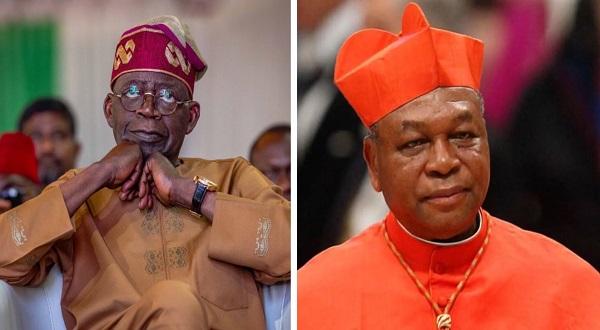
The Catholic Bishops’ Conference of Nigeria (CBCN) has raised alarm over Nigeria’s deepening socio-economic and political troubles, calling on authorities to urgently address insecurity, economic sabotage and governance failures.
In a communiqué issued after its First Plenary Meeting held from February 19 to 26, 2026, the bishops lamented recurring violence, widespread poverty and what they described as poor leadership. The statement was signed by Archbishop Lucius Iwejuru Ugorji of Owerri, outgoing CBCN President, and Bishop Donatus Ogun of Uromi, outgoing Secretary.
The bishops decried persistent massacres, mass burials and grief across communities, noting that despite Nigeria’s abundant mineral wealth, weak governance has hindered national development. They criticised the loss of trillions of naira annually to oil bunkering and illegal mining, attributing much of it to organised crime and regulatory failure.
According to the communiqué, politics in Nigeria has been reduced to electoral manipulation and personal enrichment, leading to systemic damage reflected in worsening insecurity, economic hardship and extreme poverty.
In an interview aired on Arise TV, Cardinal Onaiyekan, Archbishop Emeritus of Abuja, clarified that the communiqué was not partisan but motivated by patriotism and moral responsibility. He stressed that nearly 70 bishops from across ethnic and regional lines endorsed the message, reflecting widespread public concerns.
He expressed particular worry over declining voter turnout since 1999, citing INEC data showing only 23 per cent participation in the last general election. He interpreted this as growing distrust in the electoral system and questioned the legitimacy of leadership produced by such limited engagement.
Onaiyekan argued that electoral reforms must ensure free and fair contests, especially where incumbents oversee the process. He warned that when citizens believe their votes do not count, democracy itself is endangered.
Turning to security, the Cardinal criticised repeated official assurances that the situation is under control, saying realities on the ground suggest otherwise. He recounted a meeting with President Bola Ahmed Tinubu and security officials where government representatives painted a far more optimistic picture than what many Nigerians experience daily.
While acknowledging recent efforts, including declarations of emergency and outreach to foreign partners, he maintained that the impact has yet to be felt by ordinary citizens. “We cannot continue like this,” he said, urging decisive action against terrorists and criminals.
Onaiyekan also raised concerns over alleged large-scale illegal mining operations and oil theft, suggesting that such activities cannot persist without complicity from powerful actors. He warned that beyond economic losses, these practices are devastating communities and displacing residents.
The Cardinal criticised food importation policies that allegedly undercut local farmers, arguing that government resources would be better spent supporting domestic agriculture through subsidies, fertiliser provision and production incentives.
Asked what immediate steps he would recommend to the President, Onaiyekan prioritised three areas: restoring security, combating corruption and addressing national polarisation.
He said security must be urgently improved so citizens can live without fear. On corruption, he stressed the need for accountability, noting that in Nigeria, offenders often escape consequences. He called for stronger enforcement mechanisms to deter misconduct.
Finally, he highlighted the dangers of deepening ethnic and religious divisions, asserting that most Nigerians desire peaceful coexistence. He urged leaders to resist exploiting identity politics and instead promote unity.
“We must deal decisively with the forces tearing us apart,” he concluded, insisting that Nigeria’s future depends on courageous leadership and sincere commitment to reform.