
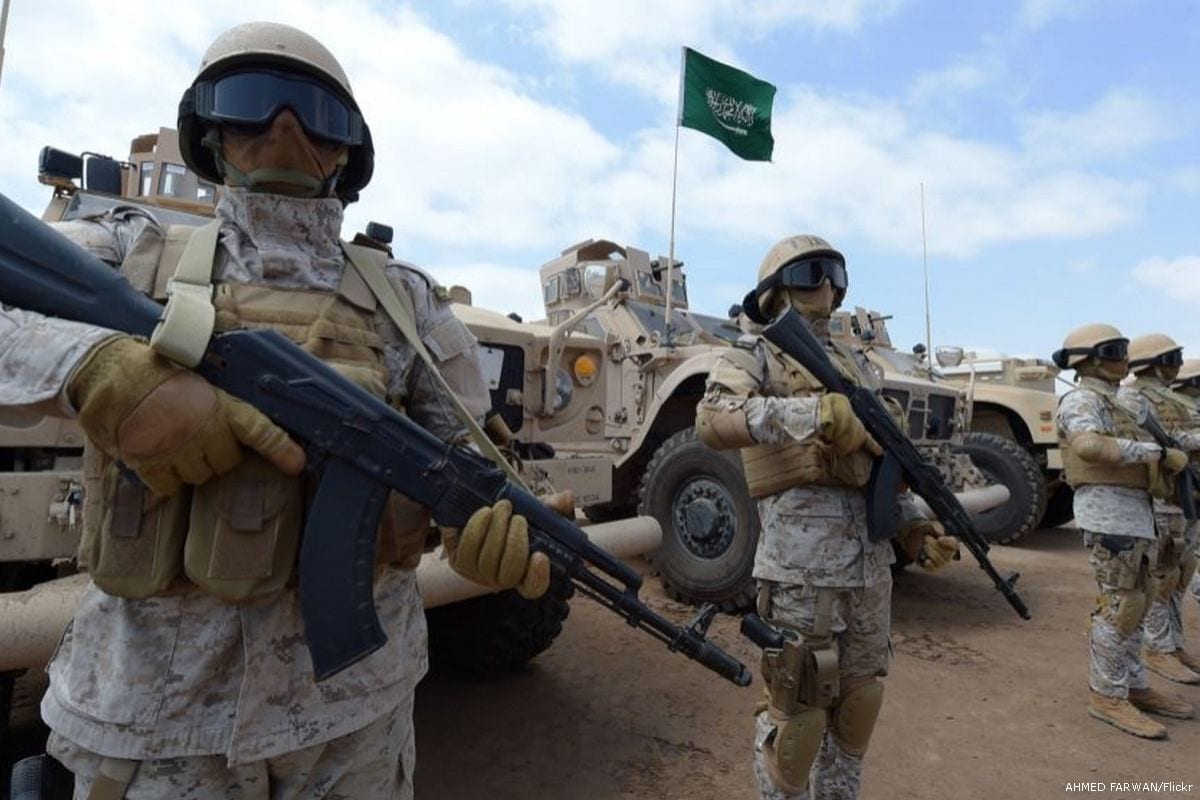
Saudi Arabia has raised its military readiness to full alert after multiple attacks attributed to Iran, as tensions across the Gulf continue to escalate.
A source close to the Saudi army told AFP on Monday, March 2, “The Saudi army has raised its readiness to full alert,” following drone strikes that targeted key energy infrastructure. The vast Ras Tanura Refinery on the kingdom’s Gulf coast went into partial shutdown after drones struck the facility three days into the widening Middle East conflict.
The complex, operated by state oil giant Saudi Aramco, is one of the largest refineries in the region and a cornerstone of Saudi Arabia’s energy sector, with a production capacity of 550,000 barrels per day. It also serves as one of the world’s biggest oil export terminals.
Earlier, a source familiar with the incident said the attack caused a fire at Ras Tanura, but confirmed that the blaze was later extinguished. Saudi Arabia, the world’s largest oil exporter, has the majority of its oil fields and petroleum infrastructure located along its eastern Gulf coast, directly across the water from Iran.
“It depends if this is seen as a direct attack on Aramco by the Iranian leadership or a rogue drone that just came close,” a source close to the Saudi government told AFP. “At this stage I think Saudi will watch and wait.”
However, the same source warned that military retaliation would be a possible option if Iran were perceived to be launching a coordinated campaign against Saudi oil installations.
Saudi Arabia would target “Iranian oil facilities if Iran mounts a concerted attack on Aramco”, the source said. A defence ministry spokesman later confirmed that two drones had targeted the refinery but were intercepted, according to a statement published by the Saudi Press Agency.
Security analysts described the attempted strike as a serious escalation in the regional conflict. Torbjorn Soltvedt, an analyst at risk intelligence firm Verisk Maplecroft, said: “The attack on Saudi Arabia’s Ras Tanura refinery marks a significant escalation, with Gulf energy infrastructure now squarely in Iran’s sights. The attack is also likely to move Saudi Arabia and neighbouring Gulf states closer to joining US and Israeli military operations against Iran.”
Near Riyadh, Iranian missiles targeting an air base that houses US personnel were also intercepted, according to a Gulf source briefed on the matter. The base has reportedly been targeted three times in as many days.
Over the weekend, Saudi authorities condemned Iranian strikes aimed at Riyadh and the kingdom’s eastern region, warning that it reserved the right to defend itself, including through retaliation.
Saudi oil infrastructure has previously been targeted by Iran-backed Houthi rebels. In 2019, aerial assaults on two Aramco facilities in eastern Saudi Arabia temporarily knocked out roughly half of the kingdom’s crude production. In March 2022, the Houthis launched a drone strike on the YASREF refinery in Yanbu on the Red Sea.
With energy infrastructure now under threat once again, the latest developments raise fresh concerns about the stability of global oil markets and the risk of a broader regional confrontation.