

The shift on how Gen Z approaches marriage isn’t necessarily a rejection of love, but rather a fundamental re-evaluation of the institution’s necessity and timing.
Several economic, social, and psychological factors are driving this change.
Economic Barriers and “Milestone Delays”
For many in this generation, the traditional sequence of life—education, career, marriage, then homeownership—has been disrupted.
* Financial Instability: Rising student debt and the high cost of living make the “wedding-and-house” dream feel mathematically impossible for many.
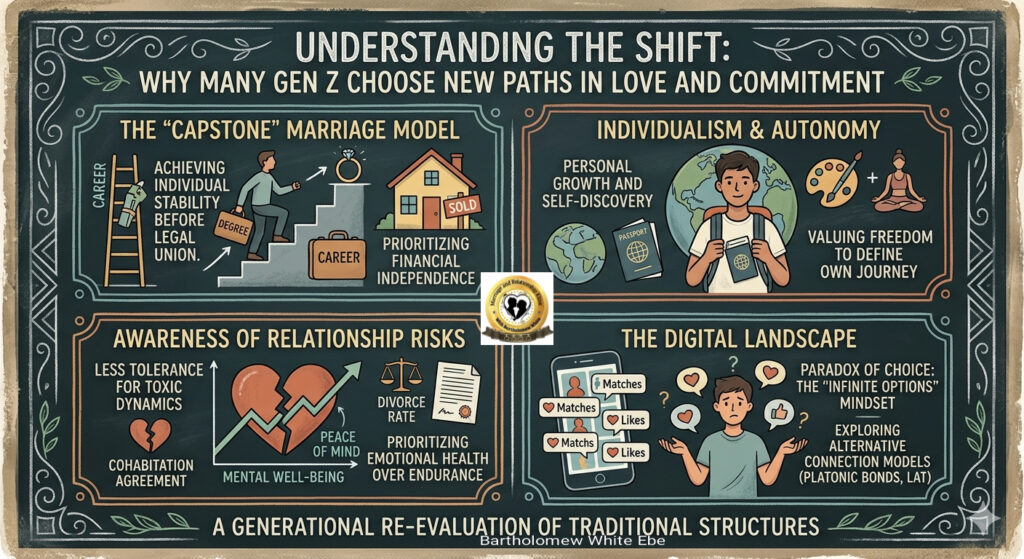
* Career Prioritization: There is a strong emphasis on achieving individual stability before merging lives with another person. Marriage is increasingly seen as a “capstone” event (something you do once you’ve “made it”) rather than a “foundation” event (something you do to start your life).
The Rise of Individualism and Autonomy
Gen Z places a high premium on personal growth and self-actualization.
* Self-Discovery: There is a collective belief that one’s 20s should be spent discovering personal identity, traveling, and building a solo life.
* Freedom over Formality: Many see a legal contract as unnecessary for a committed relationship. “Living apart together” or long-term cohabitation offers the emotional benefits of a partnership without the legal and bureaucratic weight of marriage.
Changing Views on Relationship Longevity
The perspective on staying married has also evolved. This generation is less likely to view “staying together for the sake of it” as a virtue.
* Prioritizing Mental Health: If a relationship becomes toxic or stagnates, Gen Z is more likely to prioritize their mental well-being and exit the situation rather than enduring it for social appearances.
* The “Divorce Generation” Influence: Having grown up watching the high divorce rates of previous generations, many Gen Zers are hyper-aware of the risks. This leads to “safety-first” dating—taking much longer to commit or avoiding legal marriage to prevent a messy exit later.
Digital Dating and the “Paradox of Choice”
The digital landscape has fundamentally altered how Gen Z finds partners.
* Infinite Options: Dating apps can create a “paradox of choice,” where the feeling that a “better” match is just one swipe away makes it harder to settle into the compromise required for long-term marriage.
* Niche Communities: People are finding fulfillment through platonic friendships and community groups, reducing the pressure to find a “soulmate” to fulfill every emotional need.
Ultimately, Gen Z isn’t necessarily “anti-marriage”; they are anti-obligation. They are moving toward a model where relationships are based on continuous, enthusiastic consent and personal alignment rather than tradition or financial necessity.

The Major Shift
Many members of Gen Z are rethinking traditional ideas about marriage, and several factors influence this shift.
First, financial pressure plays a major role. Rising living costs, unemployment, and debt make long-term commitments like marriage feel risky. Many prefer to stabilize their finances before settling down.
Second, there is a strong focus on personal growth and career. Unlike previous generations, Gen Z tends to prioritize self-development, education, and building a career before considering marriage.
Another key factor is the fear of divorce or failed relationships. Having grown up witnessing broken homes or high divorce rates, some Gen Z individuals are more cautious about committing.
Mental health awareness also influences decisions. Many prefer to work on themselves emotionally before entering serious relationships, rather than rushing into marriage.
Additionally, changing social values play a role. Traditional gender roles are being questioned, and people want more equal, flexible partnerships—if those expectations aren’t met, they may choose to leave.
Finally, the rise of dating apps and modern relationship culture has created more options but also less stability. With endless choices, some find it harder to commit long-term.
In conclusion, it’s not that Gen Z doesn’t value love or commitment—they simply approach relationships more cautiously, prioritizing stability, personal fulfillment, and compatibility over societal expectations.