
Human rights and development lawyer, Frank Tietie, has explained that the Nigerian Armed Forces do not have the constitutional powers to try officers accused of plotting a coup against President Bola Tinubu for treason.
Tietie stated that treason is strictly a civilian offence that can only be prosecuted in a regular court of law, not by a military tribunal.
Speaking on Monday during an interview on Arise News, he clarified that while the military may raise allegations of mutiny against its personnel, it lacks the legal authority to prosecute any officer for treason.
The lawyer also warned against the careless use of the term “coup” while investigations into the alleged actions of some serving officers are still ongoing.
“When you talk about a coup, you are referring to the elements contained in the Criminal Code relating to an attempt to overthrow the government by force,” Tietie said. “However, the Armed Forces Act does not empower the military to accuse or try any officer for treason.
“They may allege mutiny, yes, but they cannot try treason. That is why the report submitted to the president is technical in nature, because the Armed Forces Act does not confer jurisdiction on the military to prosecute an attempted coup,” he added.
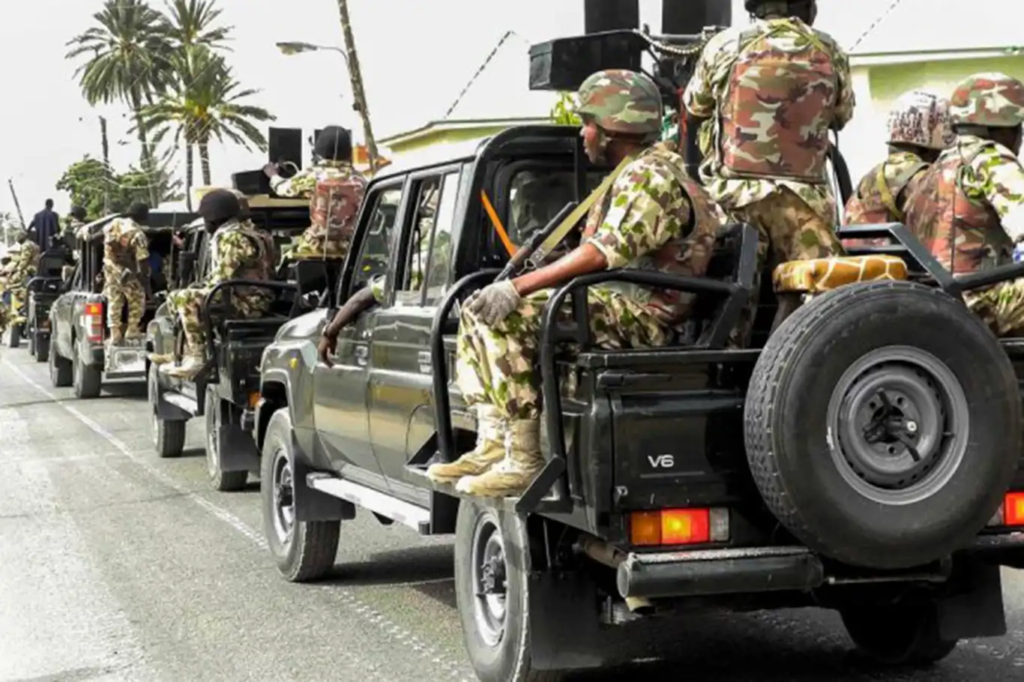
Naija News recalls that the Defence Headquarters announced on Monday that 16 officers would face trial following investigations into allegations of involvement in a plot to overthrow the government of President Tinubu.
Reacting to the development, Tietie commended the security agencies for uncovering the alleged plot before it was executed.
He stressed that, regardless of public dissatisfaction in some quarters, democracy remains Nigeria’s only viable system of governance.
“I am pleased that the intelligence agencies uncovered the alleged coup attempt before it materialised,” he said. “What matters is that intelligence was gathered, analysed and investigated over a three-month period before a report was submitted to the president in his role as commander-in-chief. That is commendable.
“This democracy may be difficult and imperfect, but it has no alternative,” he added.
Military Report Still Under Review
Tietie further noted that the military report implicating the officers is not yet final and remains subject to further scrutiny.
While acknowledging the gravity of coup allegations, he cautioned against sensationalising the issue.
“The report is not conclusive. It will undergo further review, including legal advice from the Attorney-General of the Federation, to determine whether the facts amount to an attempted coup, a treasonable felony, or another offence entirely,” he said.
He emphasised that allegations of overthrowing a democratically elected government are extremely serious, noting that Nigeria still retains severe penalties for treason under its laws.
“Words like ‘coup’ send shockwaves across the polity,” Tietie warned. “This is a democratic era, not the time of military rule when court martials decided everything.
“If a coup is truly being alleged in a democracy, it cannot be resolved through a court martial. It must be prosecuted at the Federal High Court and go through the full judicial and appellate process,” he concluded.