
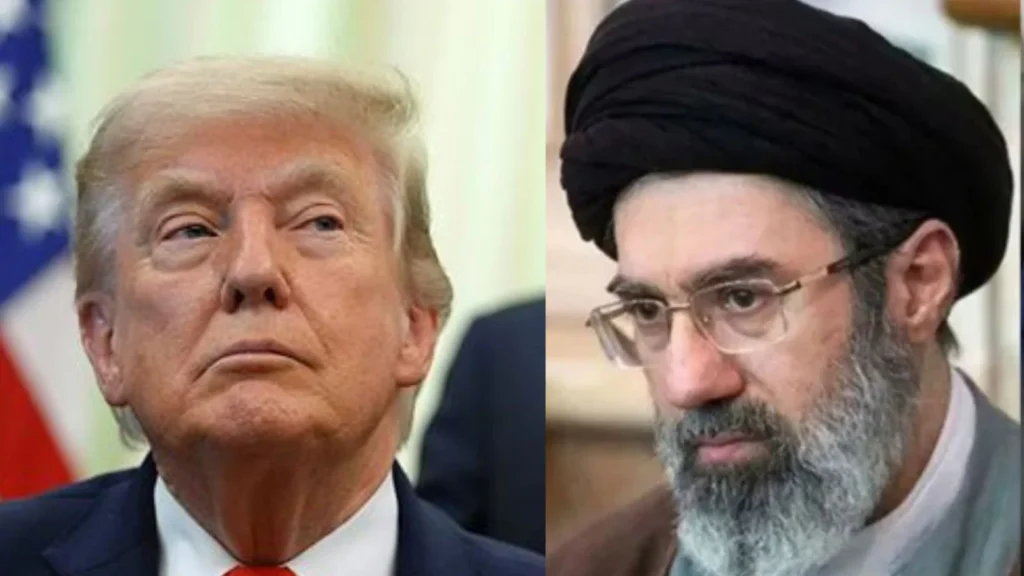
Iran has reportedly agreed to a peace framework with the United States that includes a commitment not to pursue nuclear weapons and the reopening of the Strait of Hormuz in exchange for the release of approximately $25 billion in frozen Iranian assets.
Details of the proposed agreement were disclosed by Tehran on Sunday, with Iranian officials expressing cautious optimism that the deal could help bring an end to more than three months of tensions and conflict in the region.
The development comes as global markets continue to feel the impact of disruptions in the Strait of Hormuz, a critical shipping route responsible for transporting nearly 20 percent of the world’s oil supply.
On Saturday, U.S. President Donald Trump and Pakistani Prime Minister Shehbaz Sharif announced that a formal agreement was expected to be signed on June 14, paving the way for the immediate reopening of the strategic waterway.
An Iranian Foreign Ministry spokesperson suggested that a breakthrough in negotiations could be achieved within days.
Under the proposed arrangement, the United States would unfreeze $25 billion in Iranian assets and remove restrictions affecting Iranian-linked vessels operating through the Strait of Hormuz.
Pakistani officials indicated that the agreement would establish a 60-day period for technical negotiations between Washington and Tehran. While not expected to resolve all outstanding issues, the framework is being viewed as a major step toward easing tensions between the two nations.
Qatari mediators reportedly arrived in Tehran on Sunday to assist in finalizing the deal, working closely with both sides to secure an agreement.
A signing ceremony is said to be under consideration in Geneva, Switzerland, where previous rounds of talks between American and Iranian negotiators were held before relations deteriorated.
U.S. Vice President JD Vance is expected to head the American delegation, while Iran’s parliamentary speaker, Mohammad Bagher Ghalibaf, is anticipated to represent Tehran during the discussions.
Despite the progress, uncertainty remains over the timing of any diplomatic meeting. Iran’s Foreign Ministry stated on Saturday that no immediate travel plans had been finalized for its negotiating team.
Meanwhile, regional tensions remain high. Israel’s military announced fresh strikes on Hezbollah positions in Beirut, describing the operation as a response to attacks targeting northern Israel.
Israeli Prime Minister Benjamin Netanyahu said the strikes were aimed at dismantling Hezbollah infrastructure in the Lebanese capital.
Iran, a key supporter of Hezbollah, has insisted that any ceasefire or peace arrangement with the United States must also address Israeli military operations in Lebanon.
Observers believe the proposed agreement, if successfully concluded, could ease pressure on global energy markets and mark a significant step toward restoring stability in the Middle East.
For eye witness news report, Contact us SNOW TV NEWS via snowmediatv@gmail.com or WhatsApp on +2348143077239
FOR MORE INFO, TRENDING AND BREAKING NEWS UPDATE, FOLLOW OUR SOCIAL MEDIA CHANNEL @OFFICIALSNOWTV

About the Publisher
Sir Bartholomew White Ebe is a Nigerian media personality, music artist, producer, blogger, publisher and relationship coach. He is the publisher of Snow Multimedia Connect (SNOW TV}, a digital media platform focused on news, entertainment, lifestyle, interviews, event coverage and multimedia production.
Through SNOW TV, he provides a platform for individuals, businesses, entertainers and organizations to connect with wider audiences through engaging digital content.
Email: snowbwhyte@gmail.com