
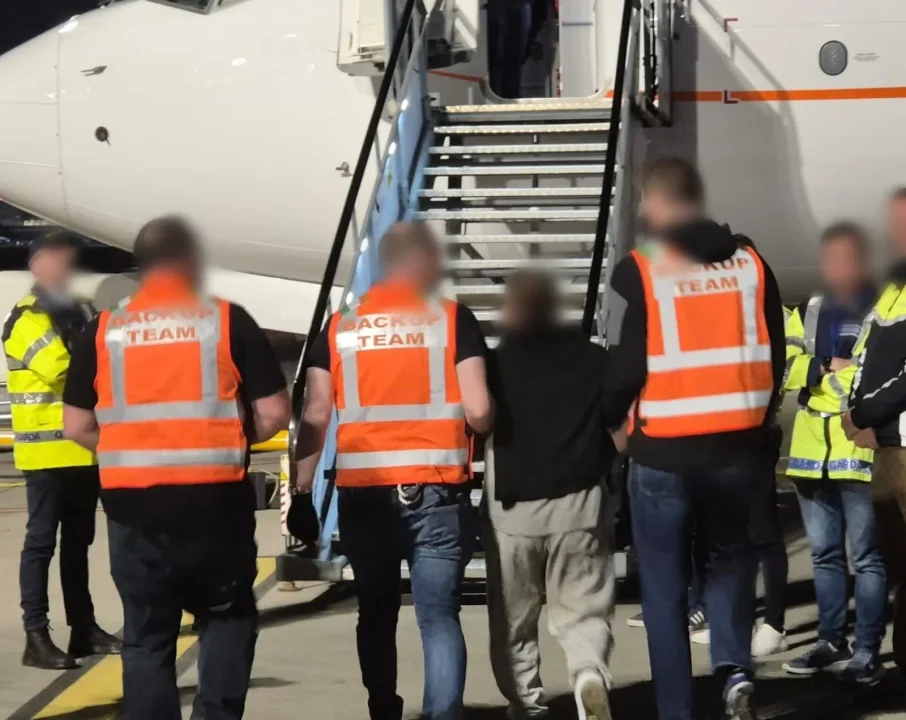
The Irish government has deported 42 South African nationals residing illegally in the country as part of a renewed effort to enforce immigration laws.
According to reports, the deportees—comprising nine men, 18 women, and 15 children from family groups—were flown from Dublin to Johannesburg on a chartered flight on Thursday, arriving in South Africa on Friday. The operation reportedly cost the Irish government an estimated €735,000 ($845,000).
Irish authorities said the individuals were removed under deportation orders issued by the Garda National Immigration Bureau after failing to take advantage of voluntary return options. Two of those deported were also reported to have previous criminal convictions in Ireland.
Ireland classifies South Africa as a safe country of origin, meaning South African citizens seeking asylum must provide evidence of a direct threat to their safety to qualify for international protection.
Irish Justice Minister Jim O’Callaghan defended the deportation exercise, stressing the importance of maintaining a strong and rules-based immigration system.
“Our immigration system must be robust and guided by clear rules. Enforcing deportation orders is necessary to maintain public confidence in the law,” he said.
The minister noted that the €735,000 figure represents an initial estimate, with final costs to be determined after the completion of the invoicing process.
The latest operation marks Ireland’s fourth deportation charter flight of 2026. Previous flights resulted in the removal of 130 individuals, including 67 European Union citizens deported due to criminal-related offences.
The development comes as South Africa faces its own migration challenges. While South African nationals are increasingly encountering stricter immigration enforcement abroad, the country is also dealing with growing anti-immigrant sentiment and campaigns targeting undocumented migrants within its borders.
With unemployment remaining above 30 percent, tensions have escalated in South Africa, prompting fears among undocumented foreign nationals and triggering calls for repatriation efforts across the region.
The situation has also affected Nigerians living in South Africa. Hundreds remain stranded amid xenophobic tensions, while Nigerian authorities continue to push for their safe return. The Nigerian government has further warned that it could reassess relations with several South African-owned companies operating in the country if attacks and harassment targeting Nigerians persist.
Meanwhile, South African officials have expressed concern over the economic consequences of the crisis, citing cancelled performances by South African artistes across Africa and disruptions to businesses owned by South Africans abroad.