
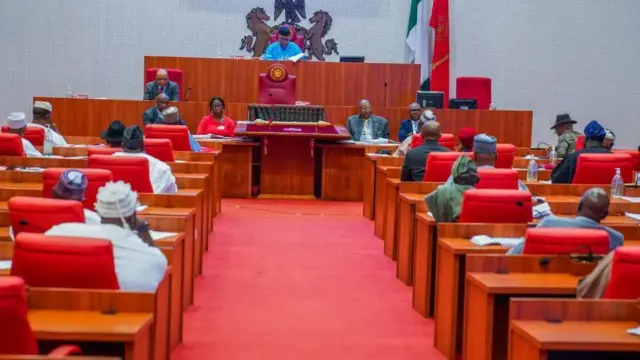
The Senate has reopened deliberations on the Proceeds of Crime Act (Amendment) Bill, 2026, after withdrawing its earlier approval of the proposed legislation over concerns about significant legal, policy and drafting deficiencies.
Lawmakers unanimously agreed during Thursday’s plenary to reverse the bill’s passage, which had been approved on July 9, following a motion sponsored by Senate Leader Opeyemi Bamidele.
Presenting the motion, Bamidele said a post-passage review uncovered several issues that require further legislative attention before the bill can proceed. “Drafting, legal and policy issues requiring further legislative scrutiny and refinement were identified,” he said.
He warned that allowing the legislation to proceed without addressing the concerns could create implementation challenges and frustrate its objectives. “The senate observes that the identified issues are fundamental to the effective implementation of the proposed legislation and, if left unaddressed, may undermine the objectives of the bill and create unintended legal and operational consequences.”
Bamidele argued that additional scrutiny was necessary to ensure the bill complies with Nigeria’s constitutional provisions and aligns with international standards on asset recovery and proceeds of crime management. “The senate notes that it is in the overriding public interest and in keeping with the senate’s commitment to enacting sound, coherent and implementable legislation that the bill be revisited to address the identified concerns,” he said.
Africans & Diaspora
“The senate… is convinced that rescinding its earlier decision will afford the chamber the opportunity to reconsider the affected provisions and ensure that the legislation conforms with international best practices in asset recovery, proceeds of crime management, and Nigeria’s constitutional and legal framework.”
The motion briefly prompted procedural questions after Senator Yahaya Abdullahi queried whether it had been properly listed on the supplementary order paper. Senate President Godswill Akpabio ruled that the motion complied with the chamber’s Standing Orders, while Bamidele clarified that Abdullahi’s observation related only to procedure and not the merits of the proposal.
Abdullahi later backed the motion, describing the review as being in the national interest, but asked whether the revised bill would return to the relevant committee or be handled by the National Assembly’s legal department. Deputy Senate President Barau Jibrin urged lawmakers to support the move, saying correcting identified flaws before a bill becomes law demonstrates responsible lawmaking rather than legislative failure.
Senator Abdul Ningi also endorsed the review, noting that such reconsideration is a common parliamentary practice. He further recommended that the bill’s sponsor, Senator Idiat Adebule, should play a central role in refining the legislation. Although some senators suggested that major amendments might require another public hearing, Akpabio ruled that the issue was not before the chamber, explaining that lawmakers were only deciding whether to withdraw the bill’s earlier passage.
Following a voice vote, the Senate unanimously approved the rescission. Akpabio subsequently directed that the bill should not be transmitted to the House of Representatives until the identified issues have been addressed and the review process completed.
The proposed legislation, sponsored by Adebule, seeks to establish an independent agency responsible for the recovery, preservation, management and disposal of assets believed to have been acquired through criminal activities.
Supporters of the bill have argued that it would strengthen Nigeria’s anti-corruption framework by separating asset management from criminal prosecution, standardising the handling of forfeited assets and creating a central database to improve transparency and accountability.
Africans & Diaspora