
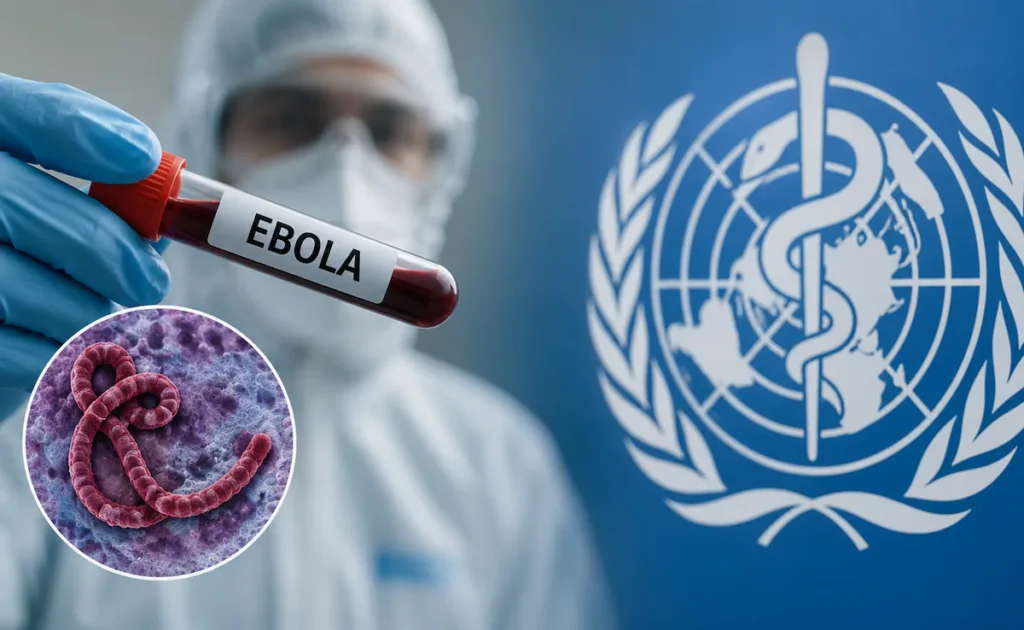
As the latest Ebola outbreak continues to affect Central Africa, the international community has mobilized nearly $500 million in support of efforts to contain the deadly virus. While the funding drive marks significant progress, it also highlights Africa’s continued dependence on external assistance during major health emergencies.
A total of $498.8 million has been pledged toward the response, leaving a funding shortfall of just $20.2 million from the estimated $519 million required. However, most of these contributions have come from countries and organizations outside Africa, even though the outbreak is centered on the continent.
The Bundibugyo strain of the Ebola virus is currently affecting the Democratic Republic of the Congo and Uganda, with more than 220 deaths recorded so far. Health authorities warn that the disease is spreading more rapidly than containment efforts can keep pace with.
Unlike COVID-19, which spreads through airborne particles and can infect large numbers before detection, Ebola is transmitted through direct contact with the bodily fluids of infected individuals who are showing symptoms. Although it is less contagious than COVID-19, Ebola is far deadlier, with fatality rates reaching as high as 90 percent in some outbreaks. There is currently no approved vaccine specifically targeting the Bundibugyo strain.
The World Health Organization (WHO) has classified the outbreak as a Public Health Emergency of International Concern, citing cross-border transmission risks and the need for coordinated international action to prevent a crisis comparable to the 2014 West African Ebola epidemic, which claimed more than 11,000 lives.
Major donors have responded swiftly. The World Bank committed $160 million to support operations in Congo, while the United States pledged $82 million toward containment efforts. European partners contributed approximately $57 million, and the United Nations Office for the Coordination of Humanitarian Affairs released an additional $60 million.
These contributions reflect lessons learned from previous global health crises, with donor nations recognizing that infectious diseases can quickly transcend borders and create devastating humanitarian and economic consequences.
However, the outbreak has also exposed the limited financial capacity of many African nations. Despite being the region most affected, African governments have made few significant financial contributions to the response. This reality is largely driven by strained healthcare systems, growing debt burdens, and limited access to essential medical resources.
The Africa Centres for Disease Control and Prevention (Africa CDC) has repeatedly stressed the need for stronger domestic health financing and greater self-reliance in responding to public health emergencies.
With a funding gap of $20.2 million still outstanding, global partners are being urged to provide additional support to ensure the outbreak is fully contained before it spreads further across the region.
Health experts continue to advise travelers and residents in affected areas to remain vigilant. Preventive measures such as avoiding contact with infected individuals, maintaining proper hand hygiene, and seeking immediate medical attention when symptoms appear remain critical to limiting transmission.
Ultimately, defeating Ebola will require sustained international cooperation, robust preparedness, and stronger health systems. The current outbreak serves as a reminder that while global solidarity is essential, Africa must continue building the capacity to respond effectively to health threats on its own.