
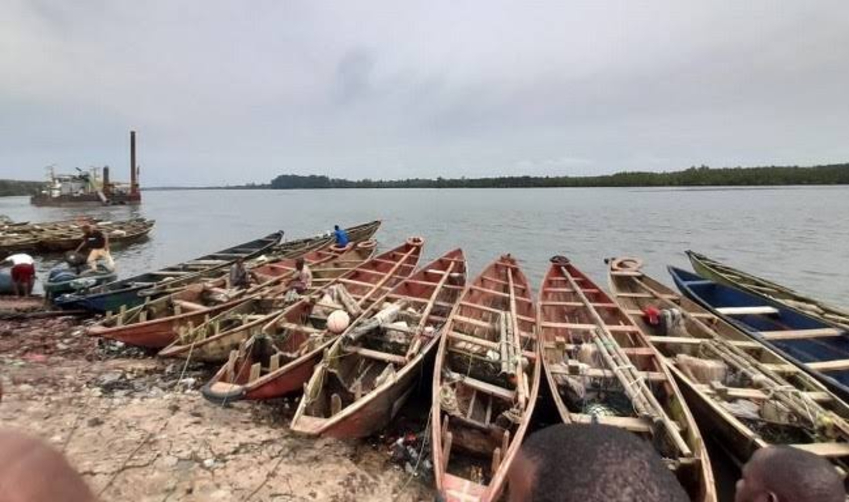
Environmental activist Nnimo Bassey has raised concerns over the worsening impact of climate change on Nigeria’s coastal communities, warning that several areas have already lost substantial portions of their land to the Atlantic Ocean due to rising sea levels and coastal erosion.
Bassey called for stronger regional cooperation among West African nations, stressing that isolated efforts would limit the region’s ability to tackle climate change effectively and influence global climate policies.
He made the remarks during a gathering of environmental advocates, civil society organisations and community leaders under the West African Climate Justice Movement, themed “Building Solidarity for Climate Justice in West Africa.”
According to Bassey, West Africa is becoming increasingly vulnerable to climate-related disasters, including rising temperatures, irregular rainfall, coastal erosion, desertification, sea level rise and forced migration.
He noted that the communities suffering the greatest consequences are among those that have contributed the least to global greenhouse gas emissions.
The Director of the Health of Mother Earth Foundation (HOMEF) emphasised that regional unity is essential to addressing the environmental challenges confronting West Africa, adding that the region remains underrepresented in global climate justice discussions.
He described solidarity as the foundation of any successful movement, saying people with shared concerns would achieve little if they remained divided.
Bassey also criticised what he termed “false climate solutions,” including carbon offset projects, geoengineering and carbon trading, arguing that such initiatives allow wealthy nations and multinational corporations to continue polluting while shifting the environmental burden to developing countries.
He warned that large-scale land acquisitions linked to carbon offset projects across parts of West Africa often lead to the loss of community lands and forests without delivering meaningful benefits to local populations.
Citing examples from Nigeria, Bassey alleged that vast forest areas have been allocated to foreign firms for carbon credit projects, enabling major polluters elsewhere to continue emitting greenhouse gases while gaining control of African forests and community lands.
He urged environmental campaigners to strengthen alliances with labour unions, farmers’ groups, indigenous communities, hunters’ associations and youth organisations in order to build a more effective climate justice movement across the region.
Bassey further called on governments and international climate negotiators to prioritise immediate reductions in greenhouse gas emissions by countries historically responsible for the largest share of global pollution.
In his keynote address, Professor Youba Sokona also advocated a united West African approach to climate action, anchored on justice, equity, sustainable livelihoods, inclusive development, and integrated strategies for energy, governance, finance and industrial transformation.