
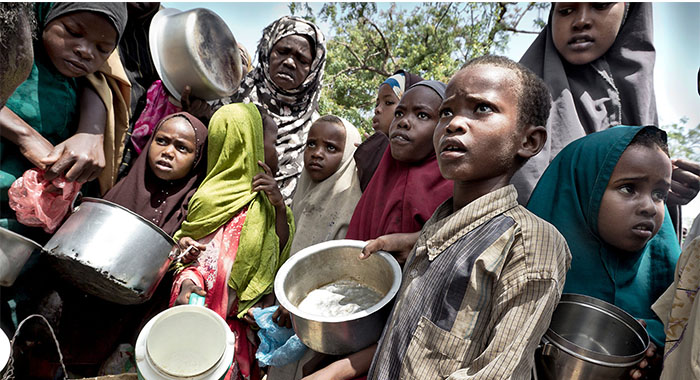
Nigeria has been identified as one of the 10 countries most affected by the global food crisis, according to the 2026 Global Report on Food Crises released by a coalition of UN agencies, the European Union, and partners.
The report revealed that Nigeria and nine other nations account for nearly two-thirds of people facing severe food insecurity worldwide. In total, about 266 million people across 47 countries experienced acute hunger in 2025—almost a quarter of those assessed and nearly double the figure recorded in 2016.
Qu Dongyu, Director-General of the Food and Agriculture Organization, warned that food insecurity is no longer a temporary issue but a persistent and recurring global challenge.
Earlier this year, the United Nations Office for the Coordination of Humanitarian Affairs disclosed that about 35 million Nigerians could face acute hunger in 2026.
The report identified conflict as the primary driver of food insecurity, with climate-related shocks also worsening conditions. It cautioned that ongoing conflicts and extreme weather could further deteriorate the situation in many countries this year, describing the outlook as bleak.
The countries most affected include Afghanistan, Bangladesh, Democratic Republic of the Congo, Myanmar, Nigeria, Pakistan, South Sudan, Sudan, Syria, and Yemen.
While slight improvements were recorded in some regions like Bangladesh and Syria, they were offset by worsening conditions in countries such as Afghanistan, DR Congo, Myanmar, and Zimbabwe.
For the first time in its 10-year history, the report confirmed famine situations occurring simultaneously in two areas—Gaza Strip and parts of Sudan.
It also highlighted a drop in global aid funding and warned that tensions in the Middle East could deepen the crisis by increasing displacement and driving up fertiliser costs. Disruptions around the Strait of Hormuz have already pushed fertiliser prices higher due to reliance on oil-based inputs.
Alvaro Lario, head of the International Fund for Agricultural Development, warned that rising energy and fertiliser costs during planting season could significantly affect food production. He called for greater support for small-scale farmers, including investment in climate-resilient crops and local fertiliser production to ease the crisis.