
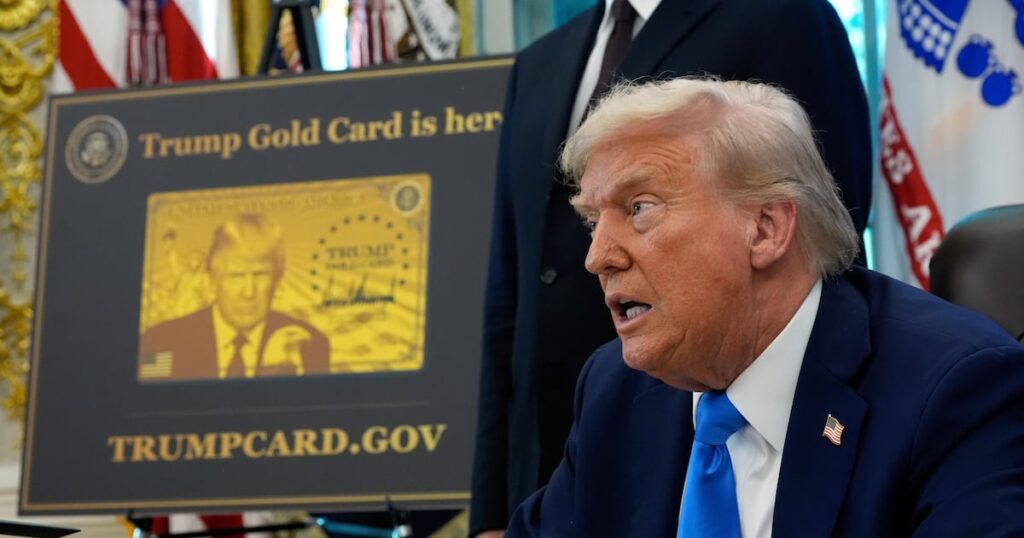
The administration of Donald Trump has started rolling out its controversial “gold card” residency programme, which allows individuals to secure U.S. residency in exchange for a large financial payment.
The policy, introduced via an executive order signed in September last year, sets the cost of residency at $1 million. Applications opened in December, and U.S. authorities have confirmed that at least one applicant has already been granted approval.
Speaking before a congressional panel, Howard Lutnick revealed that hundreds more applicants are currently in line and undergoing review.
In addition to the main fee, applicants must pay a $15,000 processing charge to the Department of Homeland Security, with officials promising a thorough and rigorous screening process. While individuals can apply for $1 million, corporate-backed applications are priced at $2 million.
The programme is part of a wider set of immigration reforms, including a directive imposing an extra $100,000 yearly fee on H-1B skilled worker visas. Trump has argued that the initiative will attract wealthy investors, create jobs, and potentially help reduce the U.S. national deficit.
Since returning to office in 2025, his administration has intensified its immigration policies, introducing tighter entry rules and increasing deportation operations nationwide.