
Iran has dismissed United States President Donald Trump’s assertion that fresh negotiations between Washington and Tehran would begin on Monday to end the ongoing conflict between the two countries.
Trump had announced on Sunday that he was postponing further military action against Iran to allow diplomacy another opportunity, claiming discussions would resume the following day.
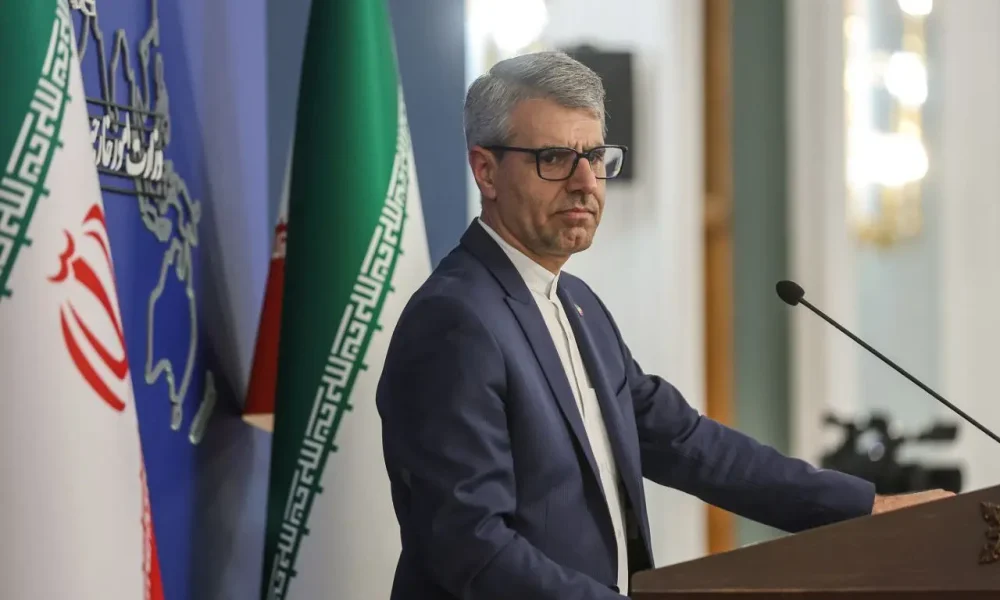
However, Iran’s Foreign Ministry denied the claim, maintaining that Tehran is not engaged in direct negotiations with the United States.
Speaking during a weekly media briefing, Iranian Foreign Ministry spokesman Esmaeil Baqaei said Iran’s current discussions are only with Oman regarding navigation through the Strait of Hormuz.
“We are not negotiating with the United States at this time. Our discussions are with Oman to ensure safe passage through the Strait of Hormuz,” Baqaei stated.
The disagreement comes as the conflict enters its sixth month, with both countries still divided over Iran’s nuclear programme and access to the strategically important Strait of Hormuz.
Trump had earlier warned of additional military strikes, including possible attacks on Iran’s energy facilities, but later suggested progress had been made toward a diplomatic breakthrough.
The latest phase of the conflict began on February 28 following coordinated military operations by the United States and Israel against Iran. Since then, periods of fighting have been interrupted by temporary ceasefires and diplomatic efforts.
Control of the Strait of Hormuz has remained a major sticking point in negotiations. Iran has tightened restrictions on commercial shipping through the vital waterway, insisting on greater oversight, new transit fees and routes closer to its coastline—demands rejected by Washington.
Despite the ongoing tensions, Baqaei said negotiations involving Oman had moved closer to an understanding over a shipping route acceptable to both sides while protecting Iran’s sovereignty and national security. He, however, noted that such an agreement would not automatically mean the full reopening of the Strait.
Speaking aboard Air Force One, Trump said the proposed discussions would centre on Iran’s nuclear activities and freedom of navigation through the Strait of Hormuz. He argued that continued pressure on Tehran was necessary to prevent the country from acquiring nuclear weapons.
Iran has consistently denied pursuing nuclear arms, insisting its nuclear programme is strictly for peaceful and civilian purposes.
Trump also claimed that Iran, alongside allies such as Saudi Arabia, the United Arab Emirates and Qatar, had urged him to suspend planned military strikes, which he described as potentially “the biggest attack since World War II.” Iranian media swiftly rejected the assertion that Tehran had made such a request.
The US president has repeatedly expressed optimism about reaching an agreement with Iran, although previous diplomatic efforts have often broken down and fighting has resumed. A ceasefire reached last month also failed to hold.
Meanwhile, Iranian lawmaker Hassan Ghashghavi disclosed that international mediators are attempting to revive a memorandum of understanding reached between the two countries in June. He said the document was intended to provide a framework for broader peace negotiations, with the Strait of Hormuz remaining the central issue.
Tensions in the Gulf persisted after a commercial tanker sailing near the coast of Oman reported hearing an explosion nearby on Sunday. The United Kingdom Maritime Trade Operations Centre confirmed that the vessel and its crew were unharmed.
Iranian President Masoud Pezeshkian also urged all parties to honour agreements reached during the conflict, stressing the importance of ensuring that commitments made are respected.